Breeding & Kidding
Overview
Breeding goats is not a neutral act. It is a deliberate choice to bring new animals into the world, and that choice carries responsibility long before a doe is bred and long after kids are born. In our setting, breeding is approached as a long-term stewardship decision rather than a seasonal task. It is shaped by observation, restraint, and an ongoing commitment to provide animals with conditions that support both physical health and stable behavior.
This page documents how we think about breeding and kidding within our own herd, under our own constraints. It reflects what we prioritize, how we prepare, and how we respond. It is not a set of instructions, nor a guarantee of outcomes. Goats, pregnancies, and births vary widely, and professional veterinary support is an essential part of responsible care, especially for those with limited experience.
Breeding as a Deliberate Decision
Not every healthy goat is bred, and not every breeding season results in kids. Decisions about whether to breed begin with asking whether doing so is appropriate for the individual animal, the herd as a whole, and the environment in which they live. Restraint matters. Rest between pregnancies, long-term soundness, and overall herd stability are weighed alongside any breeding goals.
Breeding also commits us to months of additional attention, preparation, and potential intervention. That responsibility does not begin at labor, and it does not end once kids are on the ground. It spans selection, pregnancy support, kidding preparation, early care, and post-kidding monitoring.
Pairing With Purpose
Selection Begins Well Before Breeding
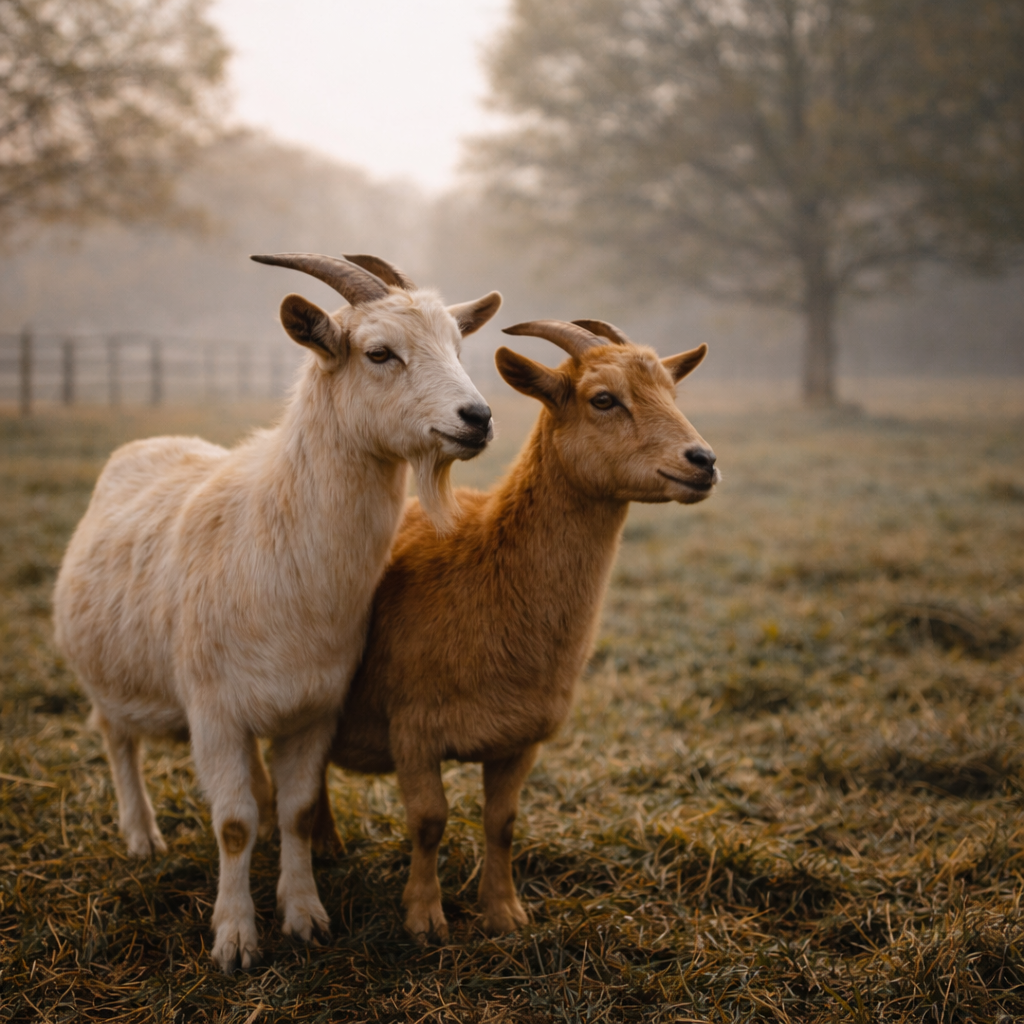
Pairing decisions are made well in advance of any breeding activity. We spend time watching how individual goats move through their days: how they interact with others, how they respond to stress, how they recover from seasonal changes, and how their bodies hold condition over time. These observations matter as much as lineage or appearance.
Health history plays a central role. We consider chronic issues, past illnesses, recovery patterns, and overall resilience. Structural soundness, gait, and general physical durability are part of the picture, especially when considering how an animal may age or carry repeated pregnancies.
Age, Maturity, and Readiness
Adequate age and maturity are essential. Breeding before a goat is physically or behaviorally ready introduces unnecessary risk, both during pregnancy and at kidding. We look for signs of full development rather than relying solely on age or size. The ability to maintain condition, regulate behavior, and tolerate routine handling informs whether an animal is ready.
Temperament and Behavior
Behavioral traits matter. Calmness, adaptability, and social stability influence not only kidding outcomes but also maternal behavior and herd dynamics afterward. Friendly, approachable goats are often easier to monitor and support, especially during periods that require closer observation.
We pay attention to how goats respond to changes, how they integrate within their herd, and whether they exhibit persistent stress behaviors. These traits are considered part of health, not separate from it.
Breed Compatibility and Crosses
When crosses are planned, compatibility is considered carefully. This includes size, structure, temperament, and how different traits may interact within our environment. We avoid novelty-driven or appearance-driven decisions. The goal is animals that function well, remain sound, and integrate smoothly into herd life.
Supporting Pregnancy Through Observation
Nutrition as Foundational Support
Pregnancy places additional demands on the body, and nutrition plays a central role in supporting does throughout gestation. We prioritize consistency and quality, avoiding abrupt changes unless clearly warranted. Adjustments are made gradually and in response to observed condition rather than fixed schedules.
Maintaining steady intake and monitoring body condition help reduce the likelihood of sudden declines late in pregnancy. Nutrition here is viewed as preventive support, not reactive correction.
Hands-On Familiarity
As pregnancy progresses, we increase attentiveness. Regular, calm physical contact helps us notice subtle changes: shifts in posture, movement, appetite, comfort, or responsiveness. Familiarity makes it easier to recognize what is normal for each doe and what is not.
Feeling pregnant goats often, observing their movement, and noting behavioral changes provide information that no checklist can replace. This familiarity is built over time, not rushed at the end.
Watching for Change Without Assuming Trouble
Approaching estimated due dates brings heightened awareness, but not urgency. Some goats show clear signs of impending labor; others are subtle. We watch for changes without assuming intervention will be required. Experience teaches patience as much as readiness.
At the same time, we recognize the importance of professional support. Having a veterinarian available, especially for those new to breeding, is part of responsible preparation. Knowing when to seek help matters as much as knowing when to wait.
Calm, Clean Spaces for Kidding
Preparing Ahead of Time
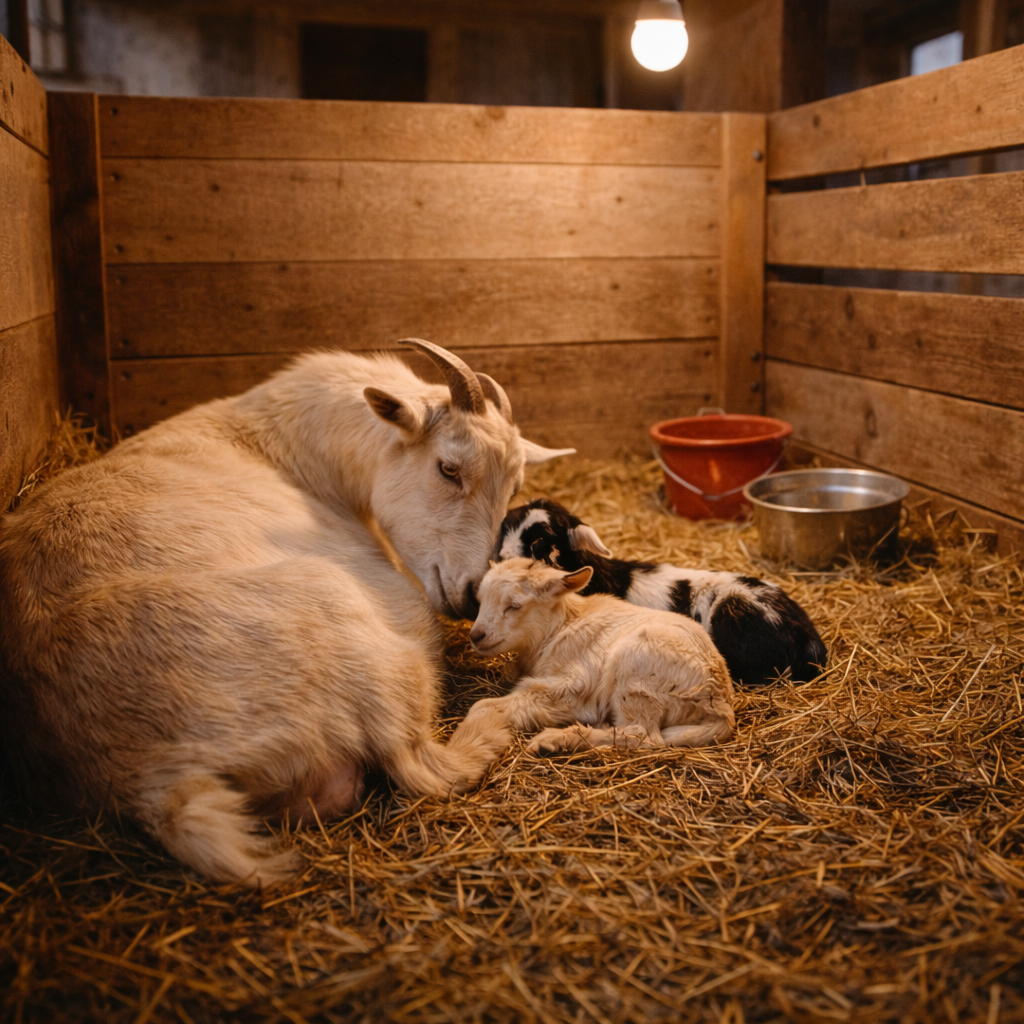
Kidding spaces are prepared well before labor begins. Preparation reduces stress for both goats and caregivers. Clean, dry, warm environments are prioritized, with bedding and layout designed to support comfort and safety.
These spaces are familiar, not novel. Predictability helps does settle and labor without unnecessary disruption. Quiet separation allows observation without isolation.
Structure That Supports Behavior
Physical structure shapes behavior. Pens are arranged to limit excessive movement, slipping, or crowding. Good footing, appropriate space, and clear boundaries reduce risk during labor and early bonding.
We avoid creating environments that require constant correction or intervention. Instead, structure is used to support natural behaviors and reduce the need for interference.
Readiness Without Assumption
Supplies are gathered and accessible before kidding season, but their presence does not imply expectation of use. A birthing kit represents preparedness, not inevitability. Calm readiness matters more than hurried response.
Early Care Focused on Stability
Presence at Birth
We are present at kidding, but we do not assume intervention is required. Most births proceed without assistance. Presence allows observation and timely response if needed, while restraint allows natural processes to unfold.
Observation focuses on the doe and kids as individuals rather than on timelines. Each birth is different, and experience teaches flexibility.
Supporting Normal Transitions
Early care emphasizes warmth, rest, bonding, and orientation. We watch for normal behaviors such as nursing attempts, responsiveness, and movement. Disruption is minimized during early bonding unless support is clearly needed.
Stability in these first hours sets the tone for the days that follow. Quiet observation often does more than immediate action.
When Additional Care Is Needed
Some situations require additional support. Maternal rejection, health concerns, or compromised kids can necessitate intervention. Being prepared for these possibilities is part of breeding responsibly.
Support is guided by observation rather than protocol. The goal is to stabilize and support, not to impose unnecessary handling.
Contingency Care and Long-Term Responsibility
Bottle Babies and Alternate Care
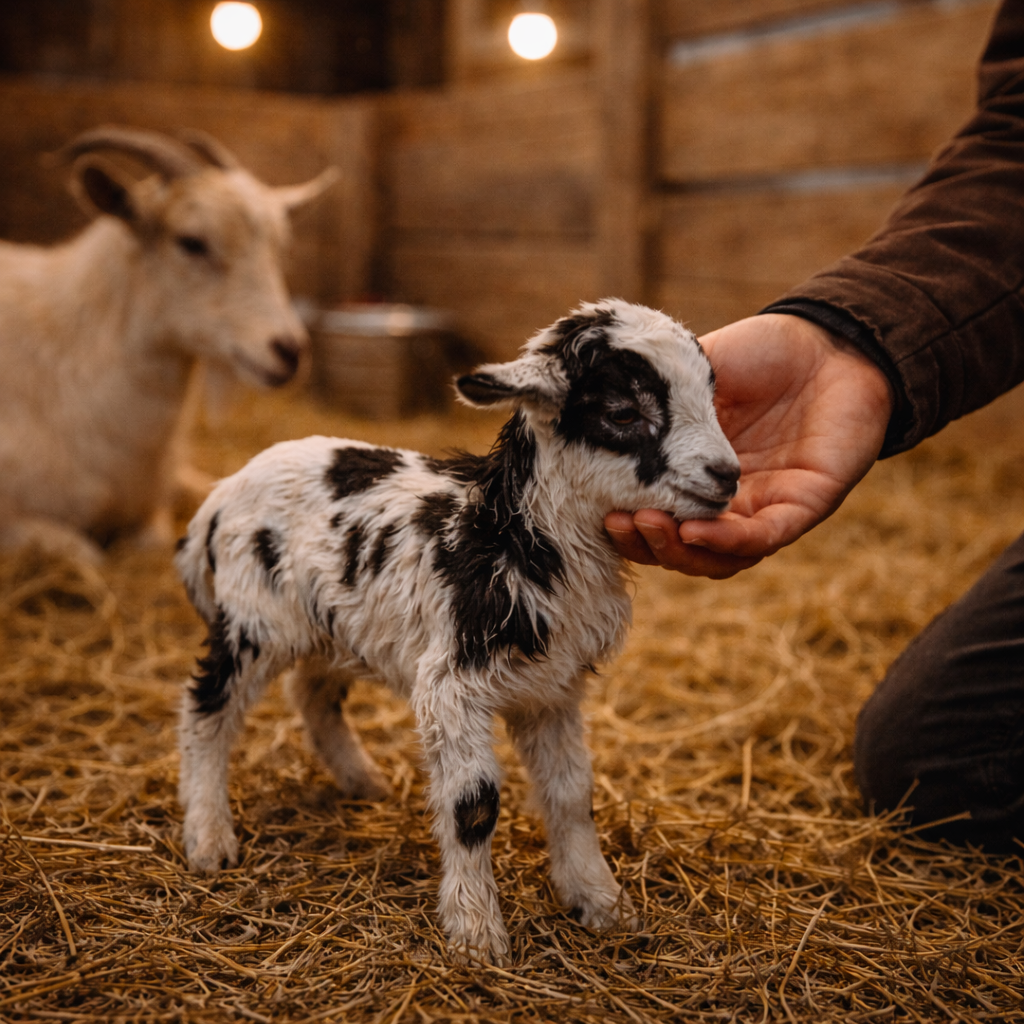
Occasionally, kids require bottle feeding due to rejection, illness, or other circumstances. This represents a significant commitment of time and attention. Bottle babies are not treated as exceptions to herd integration but as individuals requiring thoughtful long-term planning.
Care extends beyond feeding. Socialization, behavior, and eventual integration are considered carefully to support long-term stability.
Monitoring After Kidding
Responsibility continues after birth. Does are monitored for recovery, condition, and behavior. Kids are watched as individuals, not just as a group. Growth, activity, and interaction patterns provide valuable information.
Breeding does not conclude at kidding. It expands the scope of responsibility.
Breeding as Stewardship
Breeding goats is an act of stewardship. It requires restraint, preparation, presence, and follow-through. Good outcomes are shaped long before labor and supported by environments that prioritize calm, cleanliness, and stability.
In our setting, breeding is approached with humility. We plan carefully, observe closely, and intervene only when needed. This approach has helped us maintain animals that are physically sound, behaviorally stable, and able to thrive within a herd over time.