Horse Care
Overview
While this site began as a record of our goat care practices, we also maintain similar, species-specific notes for other livestock on the farm. This page documents how we care for horses in our own setting, using the same observational and descriptive approach.
Horses on this farm are not accessories, assets, or background presence. They are part of how the farm moves, works, and maintains continuity across land, livestock, and people. Their care reflects that role: steady, restrained, and grounded in long-term familiarity rather than intensity or output.
This page documents how we care for horses in our own setting. While this site began as a record of our goat care practices, we also maintain similar, species-specific notes for other livestock on the farm. What follows reflects observation, experience, and continuity rather than instruction or recommendation.
Horses and Continuity on the Farm
Horses have long been part of how this farm functions. They shape the pace at which work happens and influence how cattle are moved, how fences are checked, and how people traverse large pastures. Their presence is not ornamental, and it is not optimized for performance metrics. Horses here exist as part of a living system rather than as tools or projects.
This continuity matters. Horses remember routes, gates, water access, and herd behavior in ways that machines do not. They carry familiarity forward across seasons and years, allowing work to happen with less force and less disruption. Their care is shaped by that role: horses are expected to remain sound, willing, and calm over long periods, not pushed toward peak output.
Herd Structure and Social Organization
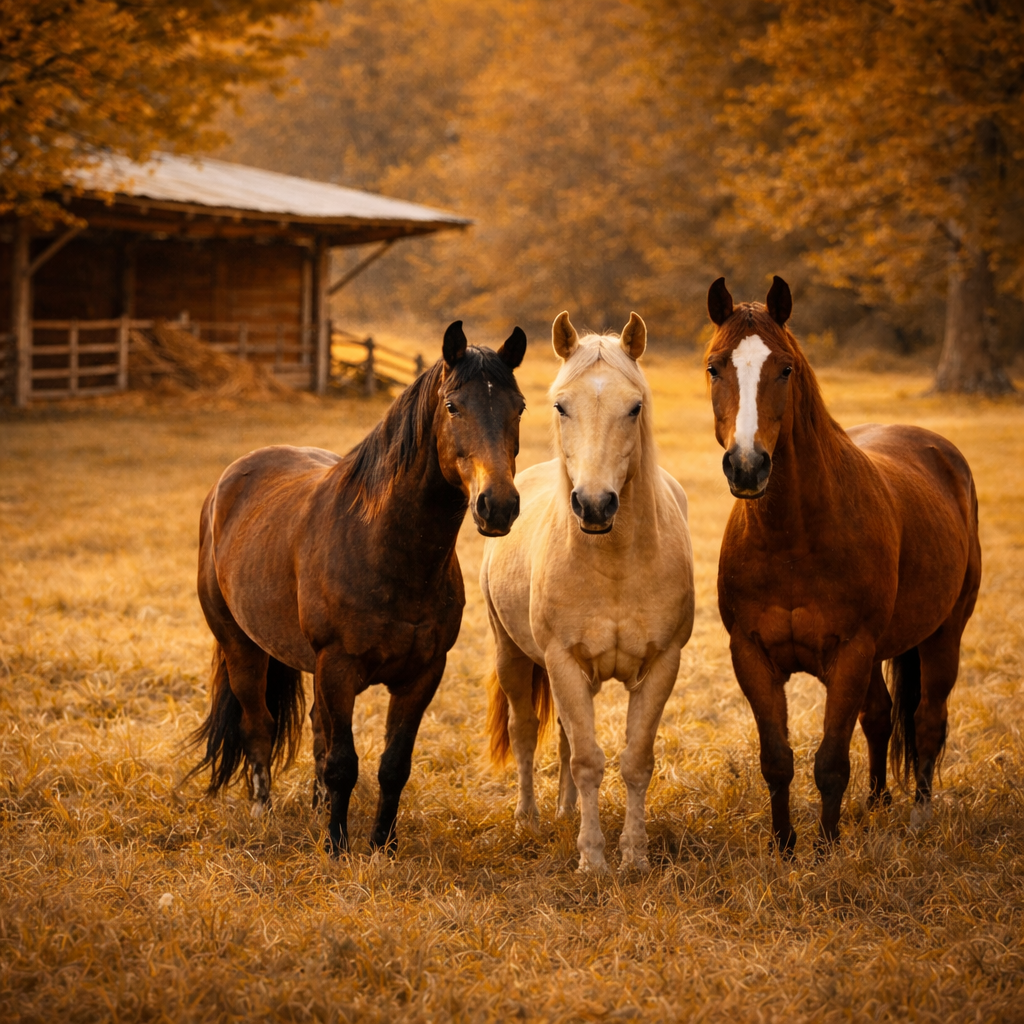
Approximately a dozen horses are kept at any given time. Herds are generally separated by sex, with temporary mixed grouping only during intentional breeding periods. This separation is stable by default and changes only when there is a specific reason to do so.
Horses live in social groups rather than isolation. Social structure is allowed to form and stabilize, and changes to grouping are made deliberately. This reduces friction, supports calm movement, and allows individual temperaments to settle into predictable patterns.
Foals and Early Integration
Foals are generally kept on-site. Early life begins with the dam, with foals remaining closely bonded for the first few weeks. After this initial period, dam–foal pairs are reintroduced to the broader herd rather than maintained in long-term isolation.
This approach allows foals to experience normal social dynamics early while still benefiting from maternal presence. Integration into the herd supports social learning and reduces stress associated with later transitions. Observation during this period focuses on movement, nursing, curiosity, and responsiveness rather than milestones or benchmarks.
Use and Workload
Horses are working animals, but work is not imposed for its own sake. Some horses are used to help move and manage cattle, particularly across large pastures where calm, readable pressure matters. Others are used primarily for riding.
All work is as needed, not scheduled for volume or duration. Horses are never driven excessively. Riding occurs regularly but is typically limited in duration, emphasizing responsiveness and soundness rather than endurance or repetition.
Workload is adjusted based on weather, footing, season, and the individual horse. Willingness, recovery, and posture are treated as meaningful indicators. Rest is part of the work cycle, not a deviation from it.
Feeding and Forage
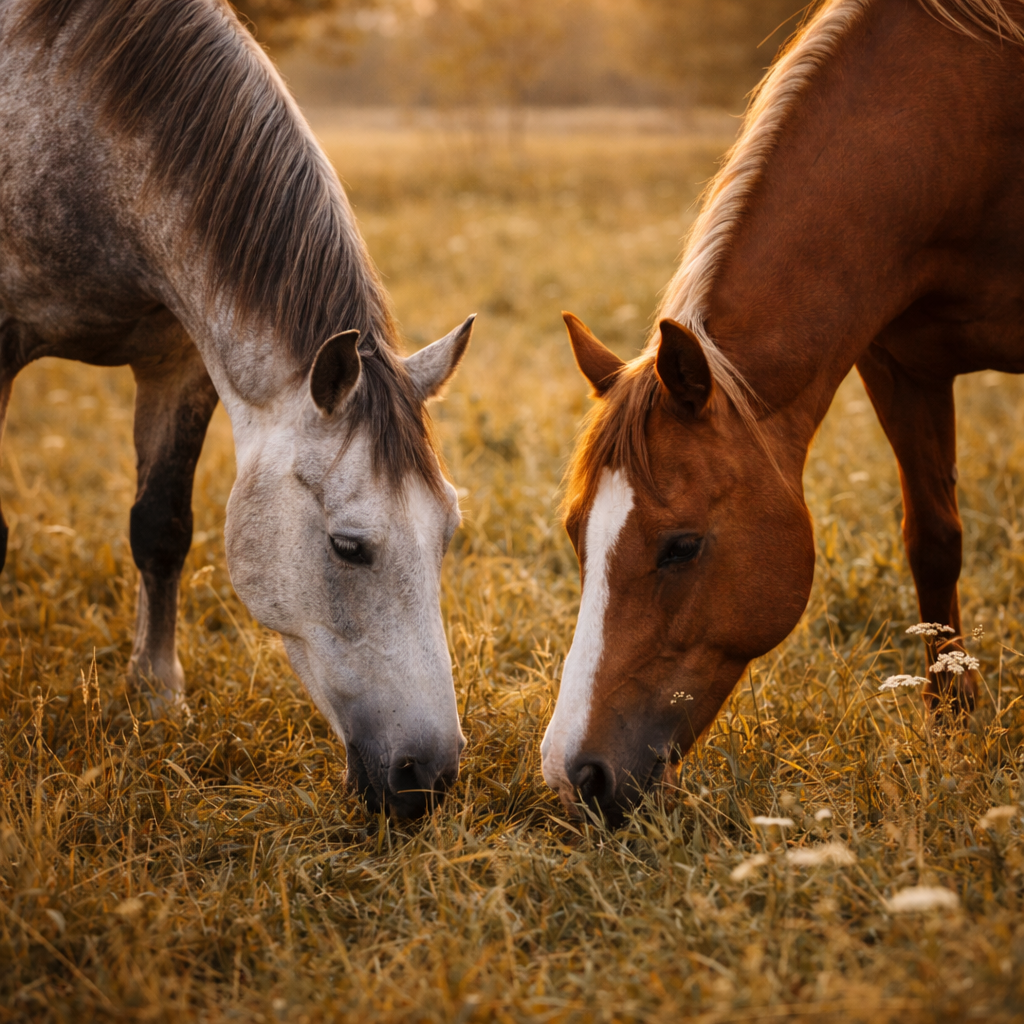
Pasture and hay form the foundation of the horses' diet. Forage access is consistent and predictable, supporting digestive stability and natural feeding patterns.
Concentrates, ration balancers, and supplements are used in moderation, as support rather than primary calories. Adjustments are made gradually and in response to condition, workload, and season. Free-choice salt and minerals are always available. Intake is observed indirectly through behavior and condition rather than measured or forced.
Feeding routines are also observation points. Changes in appetite, approach, or social order around feed are noted and folded into broader understanding of individual horses.
Shelter and Weather Response
Horses live primarily on pasture, with access to barns, run-in sheds, and natural shelter depending on location. Shelter is always available, allowing horses to choose where to rest based on weather and social context.
During winter or severe weather, access to barns is provided. Management shifts are made based on conditions rather than dates. When necessary, horses are moved to different pastures specifically to ensure shelter access.
Weather does not reduce care frequency. During extreme conditions, horses are checked more often, routines slow, and attention narrows.
Daily Routine and Observation
Horses are seen daily, even on days when they are not worked. Daily handling occurs through feeding, movement, and quiet interaction rather than formal training sessions.
Observation is continuous and informal. Posture, movement, alertness, and demeanor are assessed through familiarity rather than inspection. Changes are often noticed immediately because baseline behavior is well known.
This daily presence supports both welfare and safety. Small changes are addressed early, and horses remain accustomed to calm human interaction without being pressured or confined unnecessarily.
Handling Philosophy
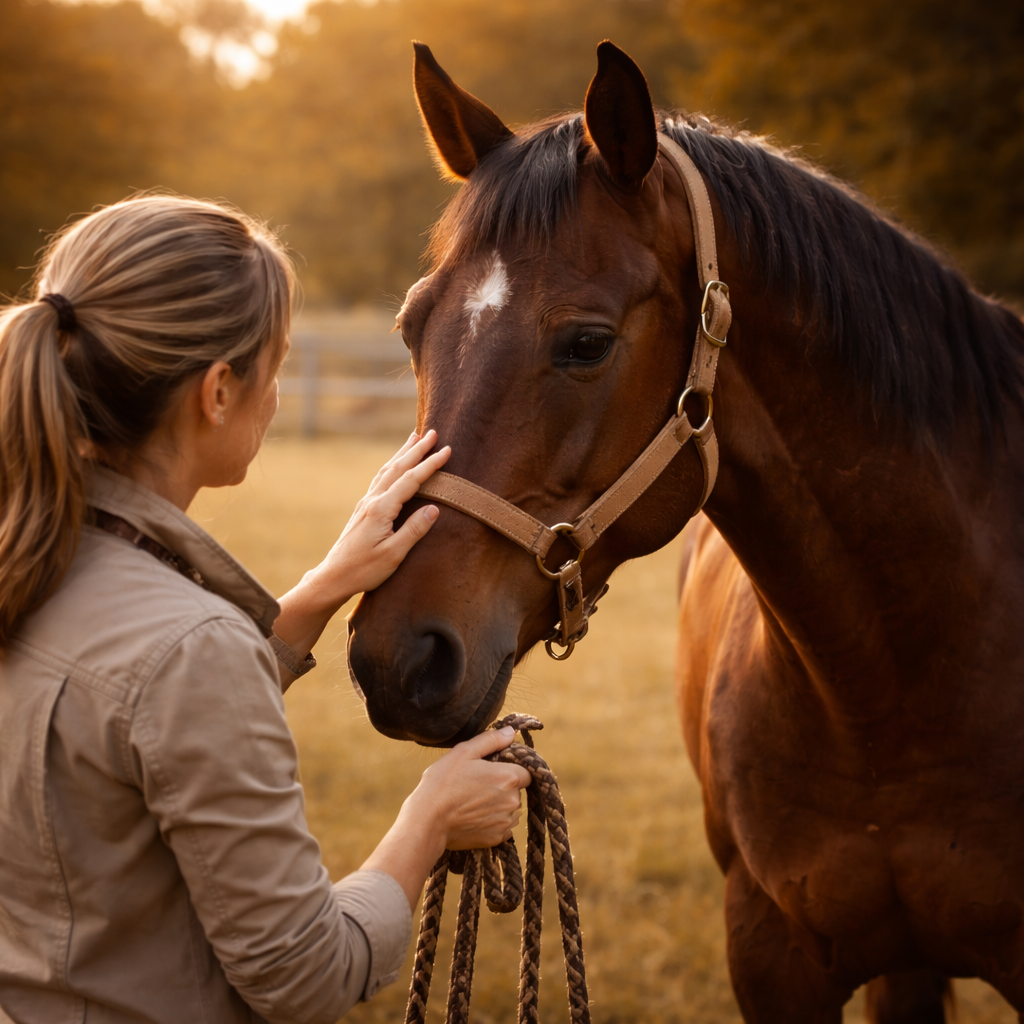
Handling is intentionally low-stress and minimal. The same people handle horses consistently over time, building familiarity and trust. Equipment is chosen for the task at hand and kept to the minimum needed.
There is no emphasis on dominance, correction, or repetition. Handling is purposeful and quiet, focused on communication rather than control. Horses are guided through space and work rather than driven through it.
Hoof and Health Care
Hoof care is managed through a combination of in-house trimming (preferred) and farrier services as needed. Hooves are addressed based on condition, wear, and movement rather than a fixed schedule.
Health care is approached through longitudinal observation. Horses are part of the same daily health awareness routines as other livestock on the farm. Notes focus on patterns over time rather than episodic events.
Hoof and Health Care
Horses are tracked in FarmBrite alongside other livestock. Records include individual identification, age, lineage, breeding notes, workload, and health observations. These records support memory and decision-making but do not replace professional care when needed.
Periodic digital backups are maintained to preserve continuity. Records are used as context rather than instruction.
Breeding Philosophy
Breeding is occasional and intentional. The goal is to maintain stock and strengthen selected traits, not to produce animals for sale. Breeding decisions are made conservatively, with long-term retention in mind.
Horses are kept with the expectation that they will remain part of the farm over time. There is no emphasis on turnover or expansion.
Limits and Scope
This page documents how horses are cared for in our setting. It does not offer instruction, training advice, or veterinary guidance, and it does not attempt to generalize beyond the conditions in which these horses live.
Care here is grounded in responsibility: if animals are kept, they are cared for consistently, thoughtfully, and every day, regardless of weather, workload, or convenience.