Feeding & Browse
Overview
Feeding at Grey Barn Farm is built around continuous access, gradual adjustment, and observation, rather than timed rations or strict formulas. Goats are browsing animals with complex digestive systems and strong preferences, and feeding practices are designed to support steady intake, rumen stability, and predictable daily patterns.
This page describes how feed and forage are offered in our setting, including what is available, how often levels are checked, and how adjustments are made over time. It is a record of practice, not a feeding prescription.
Hay: Always Available
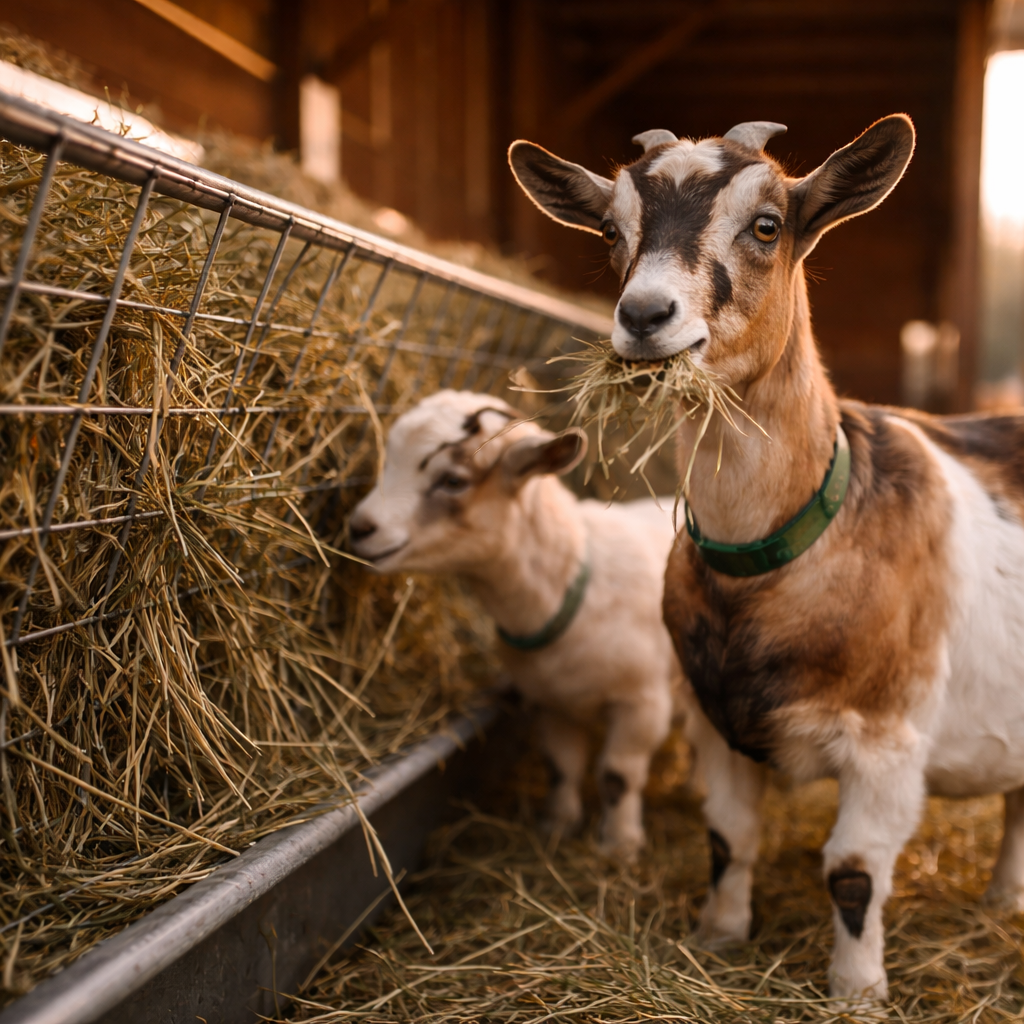
Hay forms the foundation of the goats' diet and is offered free-choice, at all times. Goats are never intentionally restricted from hay access. This supports consistent rumen function and reduces the risk of digestive disruption associated with large, infrequent meals.
The type and mix of hay offered varies depending on herd composition, particularly whether wethers are present. Calcium intake is considered when selecting hay, as certain hay types may not be appropriate in all situations. Adjustments are made conservatively, with transitions occurring gradually rather than abruptly.
Hay feeders are checked at least twice daily to ensure:
- Adequate supply
- Reasonable cleanliness
- No unexpected changes in consumption
Supplemental Feed
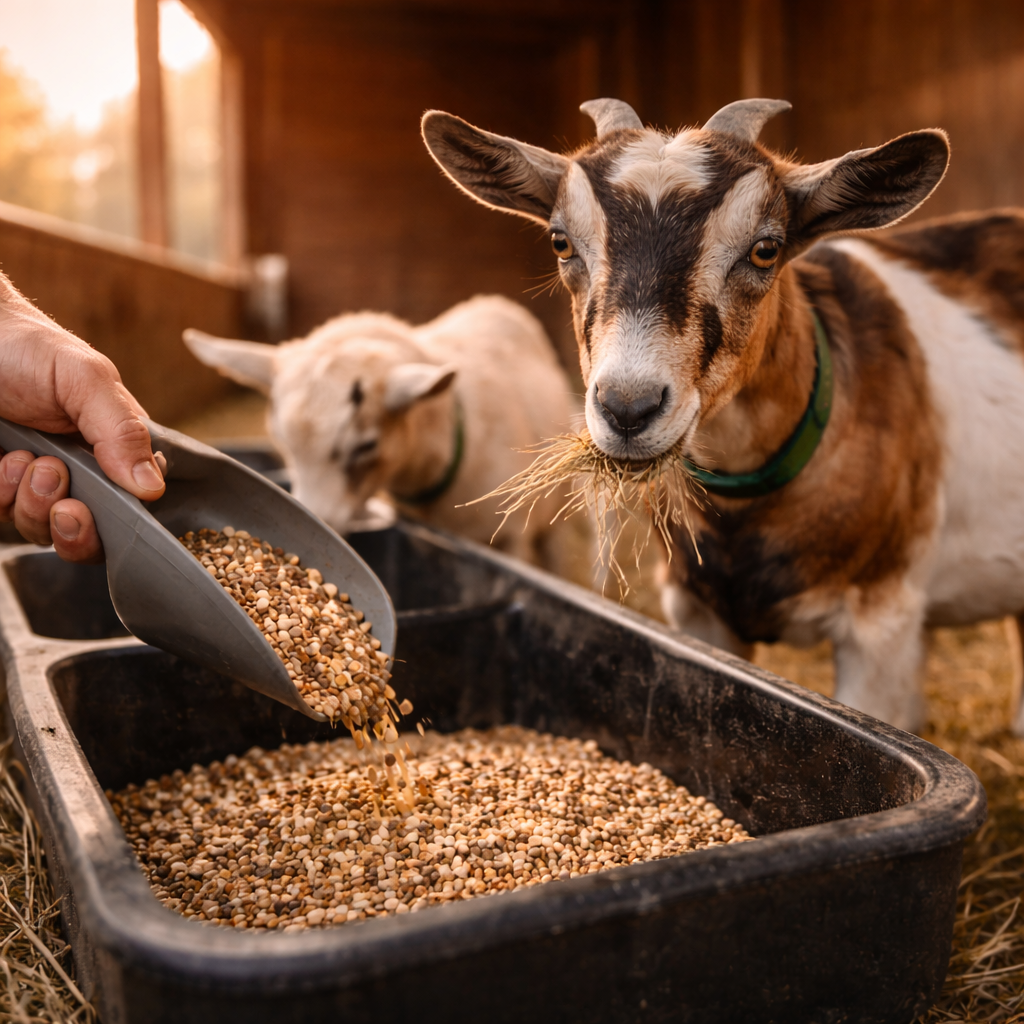
In addition to hay, goats receive high-quality pelleted feed as a supplement. Pellets are used to support body condition, life stage needs, and seasonal demands rather than to replace forage.
Some grain is offered in moderation, with careful attention paid to:
- Individual response
- Changes in appetite
- Stool consistency
- Overall demeanor
Supplemental feeding is adjusted based on:
- Age
- Body condition
- Reproductive status
- Weather and seasonal energy demands
Minerals & Baking Soda
Goats have continuous, free access to:
- Goat-specific mineral
- Baking soda
Consumption levels are observed but not forced. Sudden increases or decreases are noted as part of the overall picture rather than treated as isolated events.
Water Access & Monitoring
Clean, accessible water is considered part of feeding rather than a separate concern. Water levels and cleanliness are checked twice daily, alongside feed checks.
Observations include:
- Water intake changes
- Temperature effects
- Cleanliness and debris
- Seasonal differences in use
Pasture & Browse
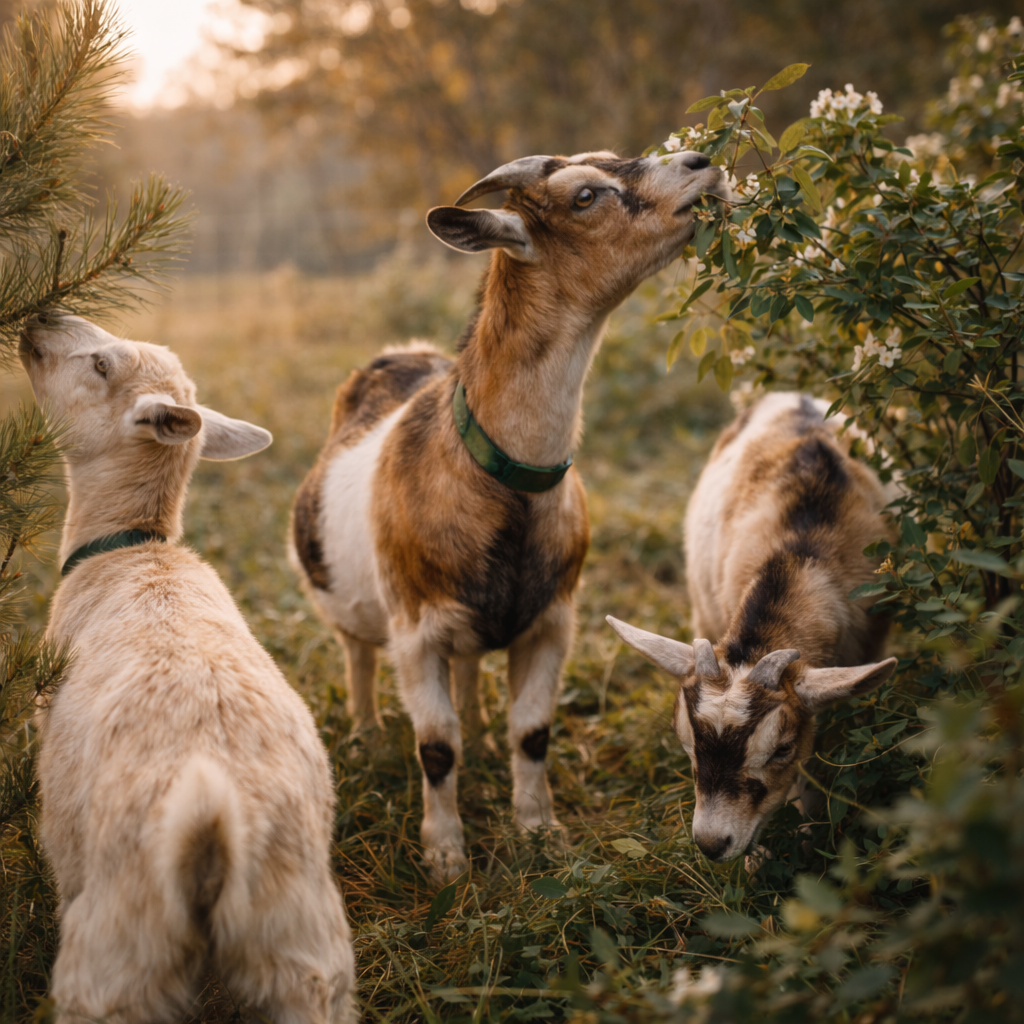
In addition to hay and supplemental feed, goats have access to pasture and browse. Grazing areas include grasses as well as woody and shrubby plants, which goats actively seek out.
Browse commonly available includes:
- Pine
- Honeysuckle
- Various shrubs and brush species
Pasture use varies seasonally and is influenced by:
- Weather
- Forage growth
- Ground conditions
- Herd movement patterns
Daily Checks & Observation
Feed and water levels are checked twice daily, and these checks serve as structured observation points rather than simply refilling tasks.
During these checks, we note:
- Changes in consumption
- Feeding order or competition
- Time spent browsing versus resting
- Individual goats separating from or joining the group
- Signs of discomfort, reluctance, or over-eagerness
Adjustments Over Time
Changes to feeding are made slowly and deliberately. When adjustments are needed, only one variable is changed at a time when possible, making it easier to observe cause and effect.
Seasonal transitions - such as shifts in pasture availability or colder weather - are anticipated rather than reacted to at the last moment. Feed changes are staged to reduce stress and digestive upset.
Feeding as Part of Illness Prevention
Consistent feeding and careful observation play an important role in illness prevention. Subtle changes in appetite, mineral use, or browsing behavior often appear before more obvious symptoms.
By maintaining:
- Continuous forage access
- Stable routines
- Detailed observation records
Scope & Limits
What is described here reflects feeding and browse practices in our setting, with our land, herd composition, and infrastructure. Different conditions may require different approaches.
This page is intended to document what we do and how we think about feeding, not to prescribe a universal method.