Shelter & Space
Overview
Shelter and space shape nearly every aspect of goat behavior, from feeding patterns and resting posture to social structure and stress levels. In our setting, housing decisions are driven less by square footage targets and more by how goats actually use space when given meaningful options.
This page describes how herds are separated, how barns and pastures are arranged, and how space is used to support predictable routines, stable social groupings, and low-conflict movement. What follows is a record of how we manage shelter and space in our own environment, not a template for other operations.
Herd Separation by Sex
Intact males are housed separately from females, in their own dedicated herd with independent shelter and pasture access. This separation is permanent rather than seasonal, and it allows both male and female groups to maintain more stable routines throughout the year.
Male goats have different social dynamics, physical behaviors, and space use patterns than females. Housing them separately reduces pressure on the female herds and limits the constant background tension that can arise when intact males are nearby. It also allows feeding, shelter use, and observation to be tailored to the needs of each group without compromise.
The male herd has:
- Its own barn
- Its own pasture rotations
- Dedicated feeders and water access
Female Herd Structure
Females are housed in two separate herds, rather than one large group. Each female herd includes one or two wethers, primarily for heat and estrus indication.
The presence of wethers in female herds has proven useful for:
- Early detection of estrus
- Maintaining social continuity
- Reducing abrupt behavioral shifts during breeding season
Internal Social Organization
Within each female herd, goats organize themselves into smaller, stable subgroups. These subgroups tend to persist over time, even as individuals move within shared pasture.
Typically, each female herd includes:
- One clear "queen"
- Several sub-queens
- Lower-ranking individuals who affiliate consistently with specific peers
Large pastures allow goats to:
- Avoid dominant individuals when needed
- Form consistent resting and browsing clusters
- Rejoin the larger group without disruption
Pasture Scale & Rotation
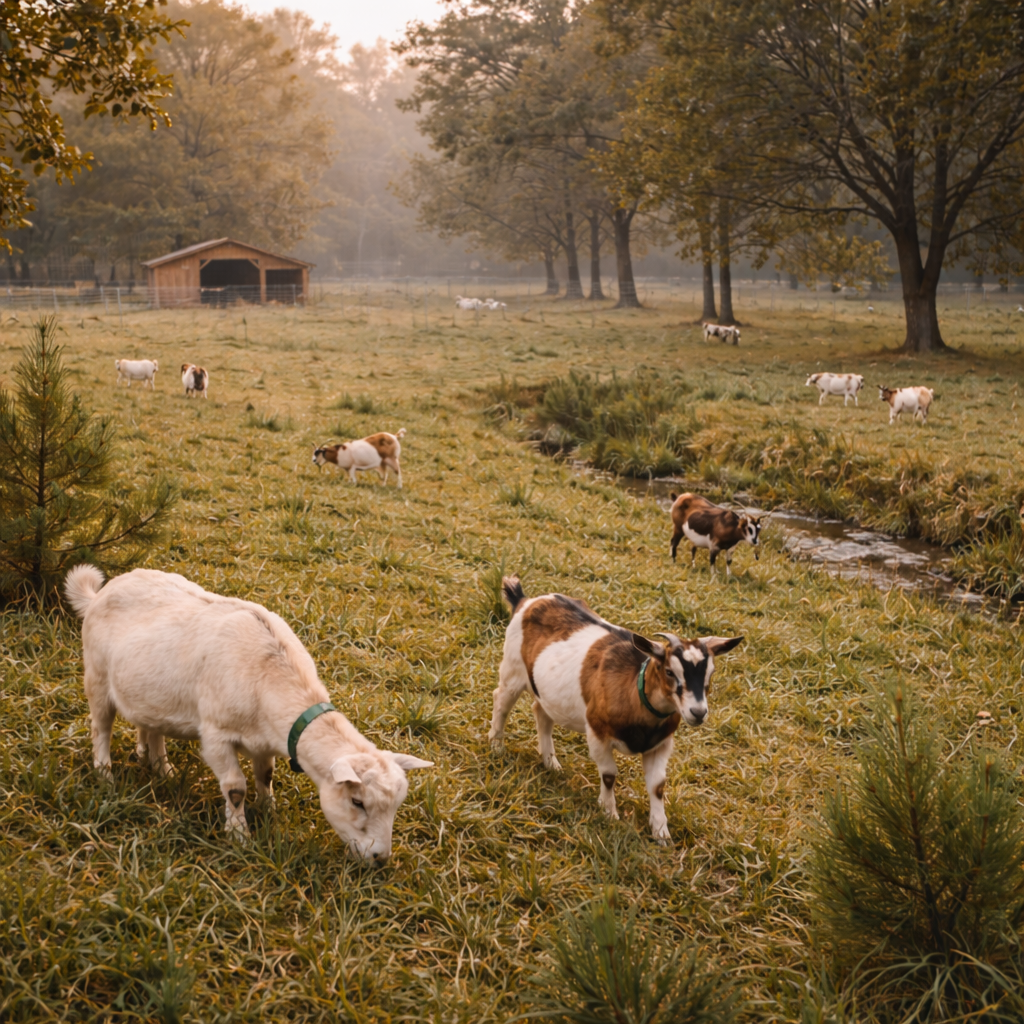
Pastures range from approximately 10 to 30 acres, depending on location and terrain. Each herd - male and female - rotates through multiple pastures over time.
The scale of these pastures allows for:
- Dispersed browsing rather than crowding
- Multiple preferred resting areas
- Natural spacing during feeding and movement
Barn Design & Function
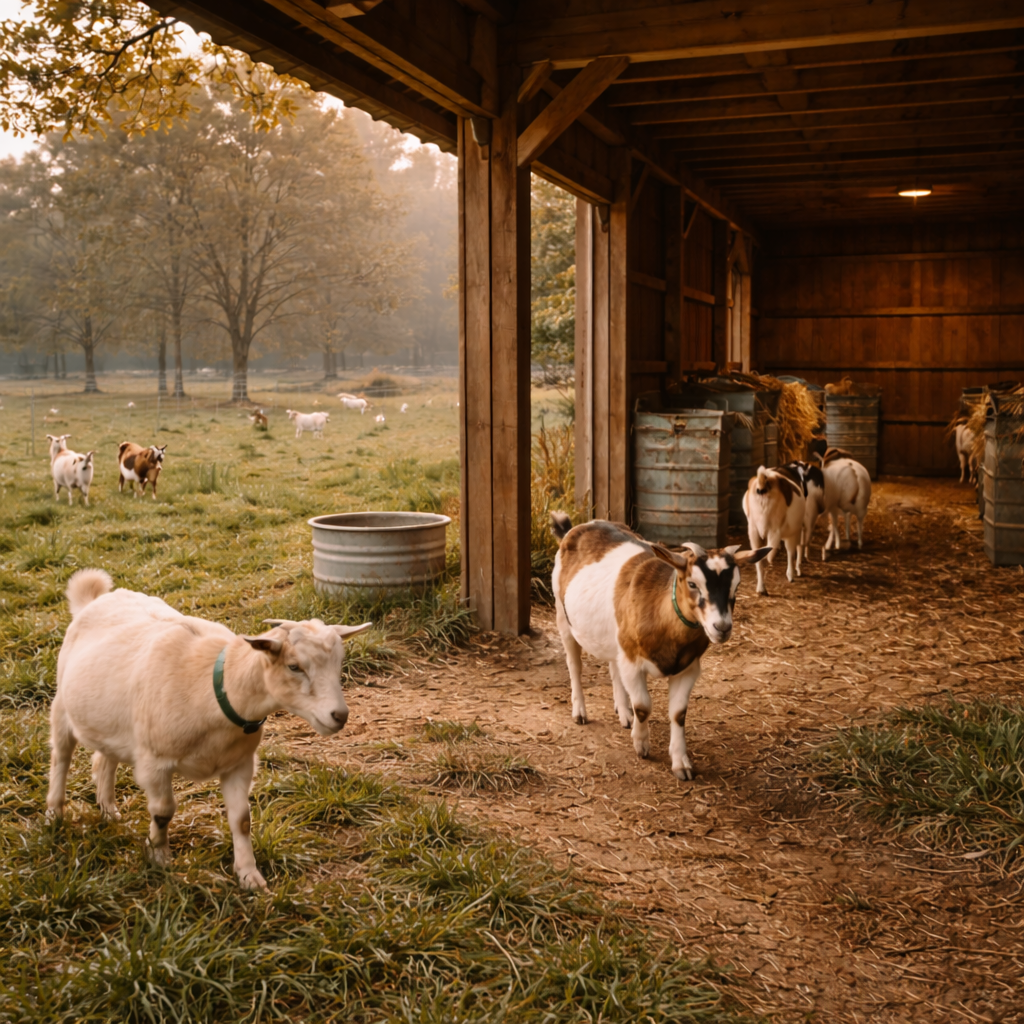
Each herd has access to a dedicated barn, positioned within or adjacent to pasture. Barns are not used as confinement spaces but as optional shelter and feeding hubs.
Each barn includes:
- Multiple hay feeders
- Multiple pellet feeders
- Loose mineral feeders
- Baking soda feeders
Feeding & Shelter Integration
Feeders are located inside barns rather than scattered throughout pasture. This concentrates feeding activity in a predictable location while still allowing goats to choose when and how long they remain under cover.
This setup supports:
- Cleaner feed
- Easier observation during daily checks
- Reduced competition compared to single-feeder layouts
Water Access
Water is primarily provided outside, rather than inside barns. Some pastures include natural creeks, while others rely on water troughs.
Water access varies by pasture:
- Creek-fed pastures allow goats to choose drinking locations
- Trough-fed pastures use multiple access points when possible
Winter Adjustments
During winter, when overnight temperatures are expected to fall below freezing, water troughs are brought inside barns overnight. This ensures uninterrupted access to unfrozen water during the coldest periods.
These indoor troughs are:
- Temporary
- Removed during the day when conditions allow
- Positioned to avoid crowding
Fencing & Predator Protection
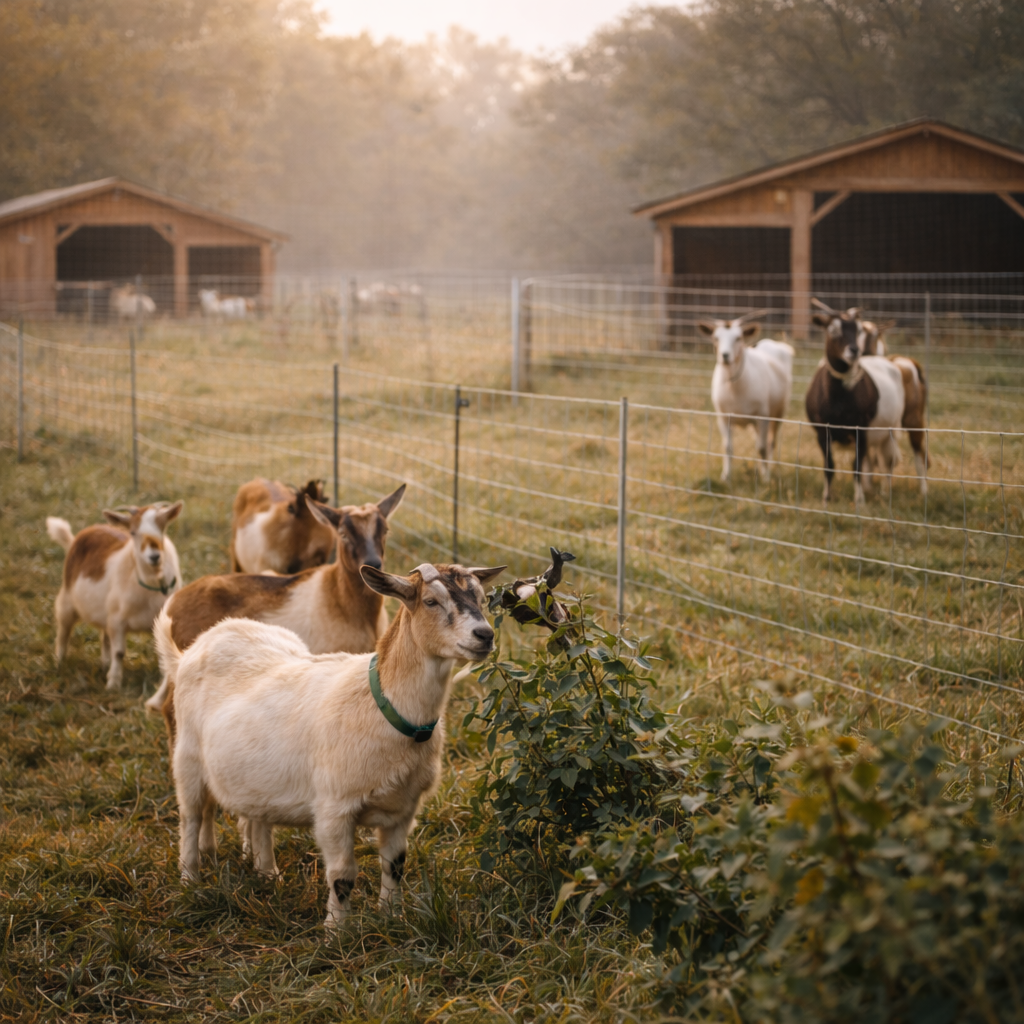
All pastures are double fenced.
Primary fencing consists of:
- 6-foot-high goat fencing
- Hot wires positioned to deter predators
Fence lines are inspected regularly, particularly after storms or seasonal changes that affect ground conditions.
Space as Stress Management
Adequate space allows goats to regulate their own exposure to stress. Rather than relying on intervention, space provides goats with the ability to:
- Step away from conflict
- Avoid persistent dominance pressure
- Choose resting distances
Observation Across Space
Large pastures and open shelter layouts make observation easier rather than harder. Changes in movement patterns, preferred resting spots, or barn usage often signal subtle shifts in herd dynamics or health.
Examples include:
- A goat consistently choosing isolation
- Changes in subgroup composition
- Altered shelter use during weather events
Shelter as Option, Not Obligation
Barns function best when goats can choose them. Forced confinement tends to increase agitation and disrupt social patterns, particularly in female herds.
By maintaining open access and multiple resource points, barns serve as:
- Protection from weather
- Feeding hubs
- Social regrouping spaces
Scope & Limits
This approach reflects our land, herd size, climate, and infrastructure. Space requirements, fencing strategies, and shelter design will necessarily differ in other settings.
What's described here is not a recommendation, but a record of how shelter and space function within our system and how goats respond to it over time.