Livestock Care Overview
Overview
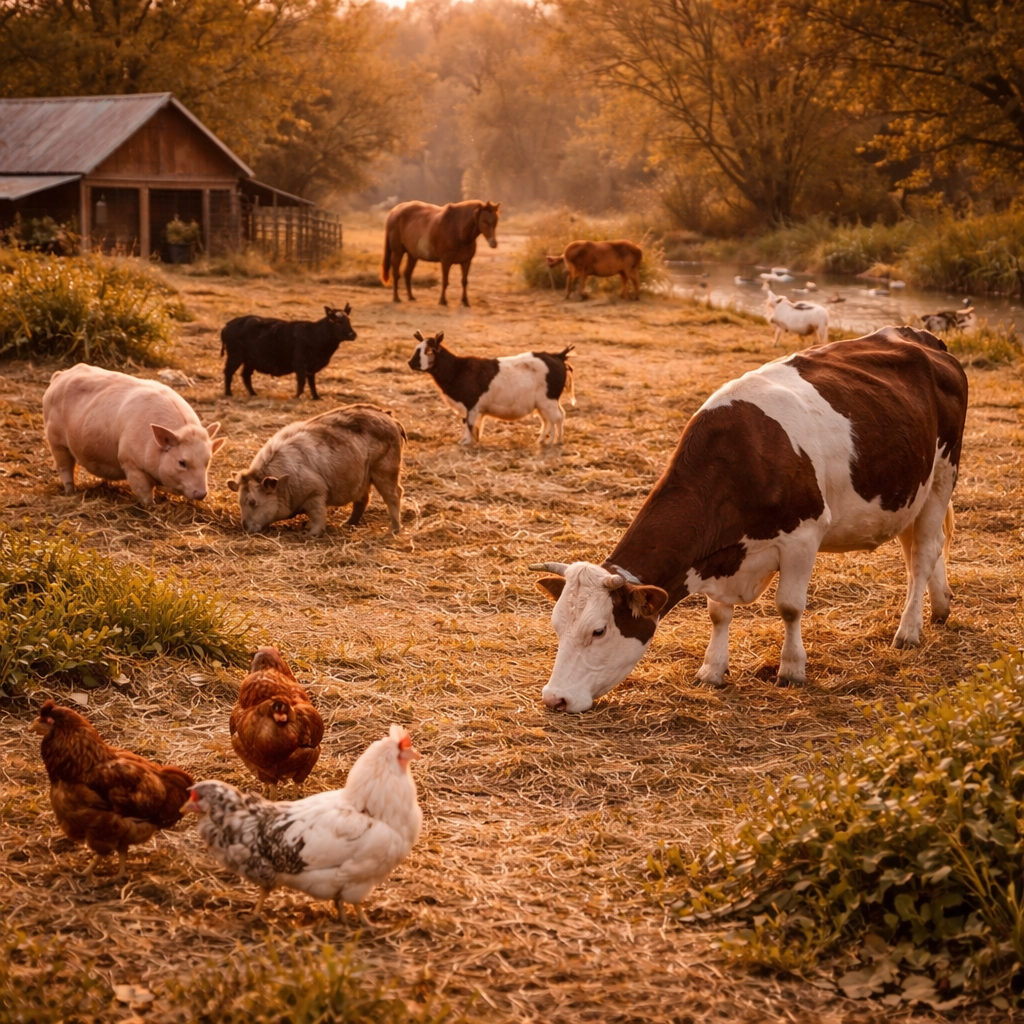
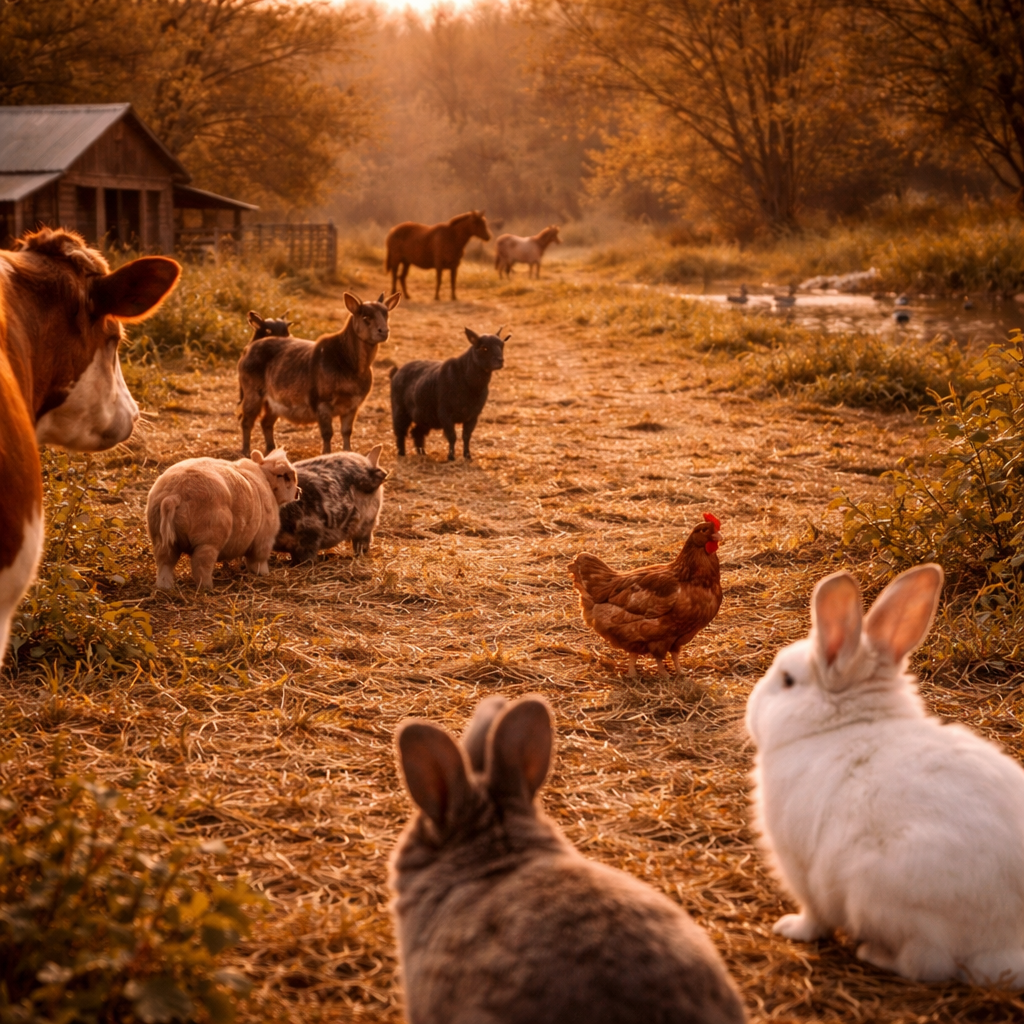
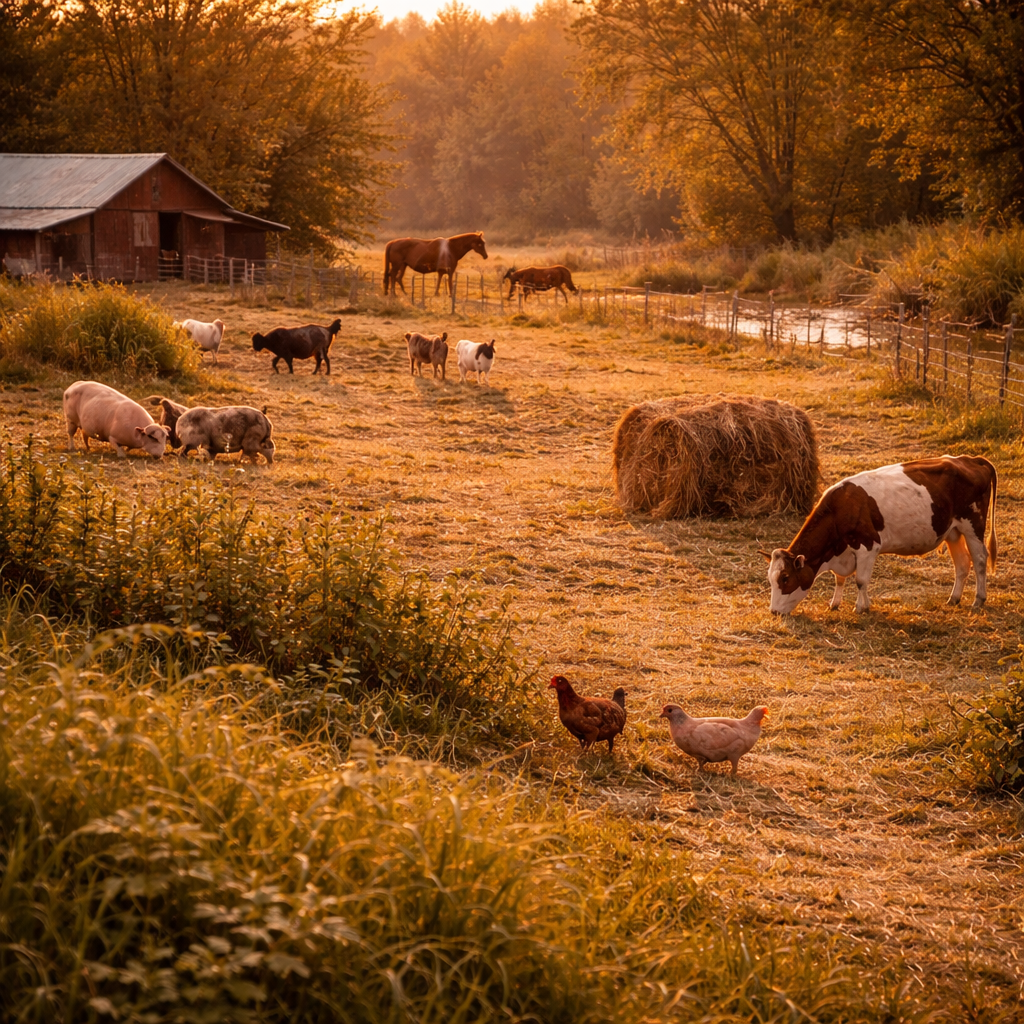
Although this site centers on goat care, the farm itself functions as a multi-species system. Cattle, horses, hogs, poultry and waterfowl, rabbits, and bees are all managed alongside goats, each with their own requirements, rhythms, and constraints. This section exists to document how care for those species is structured here, using the same observation-first, place-specific approach that shapes goat care throughout the rest of the site.
As with the goat pages, the material here is not intended as instruction or recommendation. It is a record of how care unfolds on one land base, across multiple species, over time. Decisions reflect accumulated experience, seasonal adjustment, and practical limitation rather than idealized models or production targets.
The species documented here differ widely in behavior, physiology, and interaction with land. What unifies them is not technique, but approach: attention before action, continuity over optimization, and systems designed to remain workable year after year.
Systems Across Species
Each species page is organized by topic - housing, feeding, breeding, health, daily routines - not because those elements are separate in practice, but because separating them allows closer examination. In reality, care functions as a single system shaped by land, labor, climate, and time.
Cattle and horses influence pasture structure and recovery. Hogs interact directly with soil through rooting and movement. Poultry and waterfowl affect ground condition, insect pressure, and nutrient cycling. Rabbits occupy a smaller physical footprint but require careful attention to housing, cleanliness, and social grouping. Bees operate on a different scale entirely, extending the farm's footprint through pollination while remaining largely autonomous.
Each species page documents how those systems intersect without attempting to force uniformity. Care is species-appropriate by design, not standardized across animals.
Observation as the Common Thread
Across all non-goat species, observation is the central organizing skill. Daily presence establishes baseline behavior - how animals move, eat, rest, and interact with their environment. Changes are interpreted in context rather than treated as isolated problems.
This approach is especially important in multi-species settings, where patterns emerge over time rather than announcing themselves through single events. Subtle shifts in ground condition, social spacing, appetite, or routine often matter more than dramatic symptoms. Decisions are shaped by what is repeatedly seen, not by what is briefly noticed.
The pages in this section emphasize observation before intervention. Action is taken when needed, but it is informed by accumulated attention rather than urgency alone.
Breeding, Growth, and Restraint
Breeding across species is approached with restraint. Cattle, hogs, poultry, rabbits, and bees all reproduce naturally within systems that prioritize stability over output. Breeding decisions are made deliberately, with attention to long-term land capacity, labor, and animal well-being.
Not every species is bred every year, and not every potential outcome is pursued. Strong years support limited harvest - whether meat, eggs, honey, or breeding stock - while quieter years are allowed to remain quiet. This restraint reduces pressure on animals and land alike, and it keeps care sustainable rather than extractive.
Where reproduction occurs, early life is supported through observation, appropriate grouping, and minimal interference unless conditions require it.
Land as a Shared Constraint
Land shapes every care decision documented here. Pasture availability, soil type, water movement, and seasonal growth patterns all impose limits that cannot be ignored. Rather than attempting to override those limits, care systems are built around them.
Rotation, spacing, and recovery appear repeatedly across species pages, though applied differently depending on the animal involved. Poultry and waterfowl require particular attention to water access and saturation. Hogs require soil awareness. Cattle and horses require long recovery windows. Bees require forage continuity beyond the immediate apiary footprint.
These constraints explain why care looks the way it does. Choices reflect what can be sustained, not what could be maximized.
Continuity Over Time
Care for non-goat species is structured to remain workable over years rather than seasons. Routines are intentionally repeatable. Infrastructure favors durability over novelty. Changes are introduced slowly and evaluated over time.
Records play an important role here. While animals are not reduced to data points, written records support memory, reveal patterns, and prevent reactive decision-making. This is particularly important in multi-species systems, where interactions between animals and land unfold gradually.
The emphasis throughout is on continuity - keeping animals healthy, land functional, and routines manageable across changing conditions.
How to Read These Pages
Each species page can be read independently, but they are best understood as parts of a shared system. Readers are encouraged to read for context rather than instruction, and to pay attention to why certain choices were made rather than how they might be replicated elsewhere.
Not every practice described here will translate to other settings. Climate, scale, labor availability, and personal goals all matter. The value lies in seeing how care decisions are framed, how uncertainty is handled, and how systems are adjusted without abandoning stability.
This section documents how multiple species are cared for on one farm, using the same principles applied throughout the site: observation, restraint, continuity, and respect for place.