Bee Care
Overview
While this site began as a record of our goat care practices, we also maintain similar, species-specific notes for other livestock on the farm. This page documents how we care for bees in our own setting, using the same observational and descriptive approach.
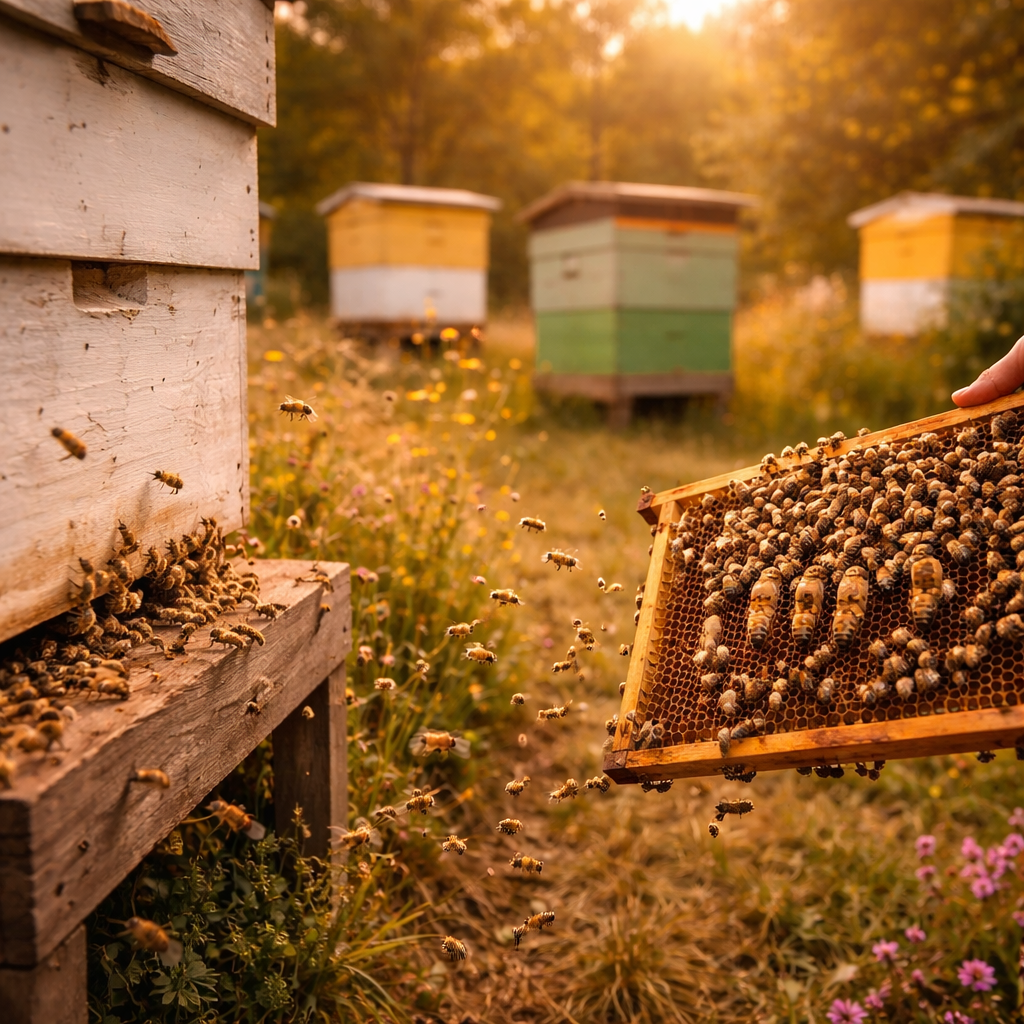
Bees are kept on our farm as a distributed system of hives placed across multiple locations, each serving both the colony itself and the surrounding land. These hives support pollination of fruit trees, gardens, and forage plantings, while also producing honey, comb honey, and beeswax for candle making in strong years. This page documents how bees are managed in our setting, shaped by long-term observation, seasonal rhythms, and practical limits.
The focus of the apiary is colony stability rather than maximum production. Care decisions prioritize continuity, restraint, and responsiveness to hive conditions as they develop over time.
Continuity of Practice
Beekeeping on the farm is organized around named apiary units, each associated with a specific location and purpose. Most hives remain in long-term, stationary placements, while a smaller number are portable and used where seasonal pollination needs arise.
This structure allows colonies to remain familiar with their surroundings and forage patterns while still supporting flexibility where needed. Apiary placement reflects long-term land use rather than short-term output goals.
Colony Structure and Natural Cycles
Colonies are allowed to follow their natural rhythms as much as possible. Natural requeening and supersedure are expected parts of hive life, and queens are replaced by hand only when necessary to support colony continuity.
Swarming is treated as a natural occurrence in beekeeping rather than a failure of management. When it happens, it is observed and accounted for as part of the colony's seasonal cycle. Intervention is limited and deliberate, with the goal of supporting long-term stability rather than preventing every natural behavior.
Seasonal Rhythm and Observation
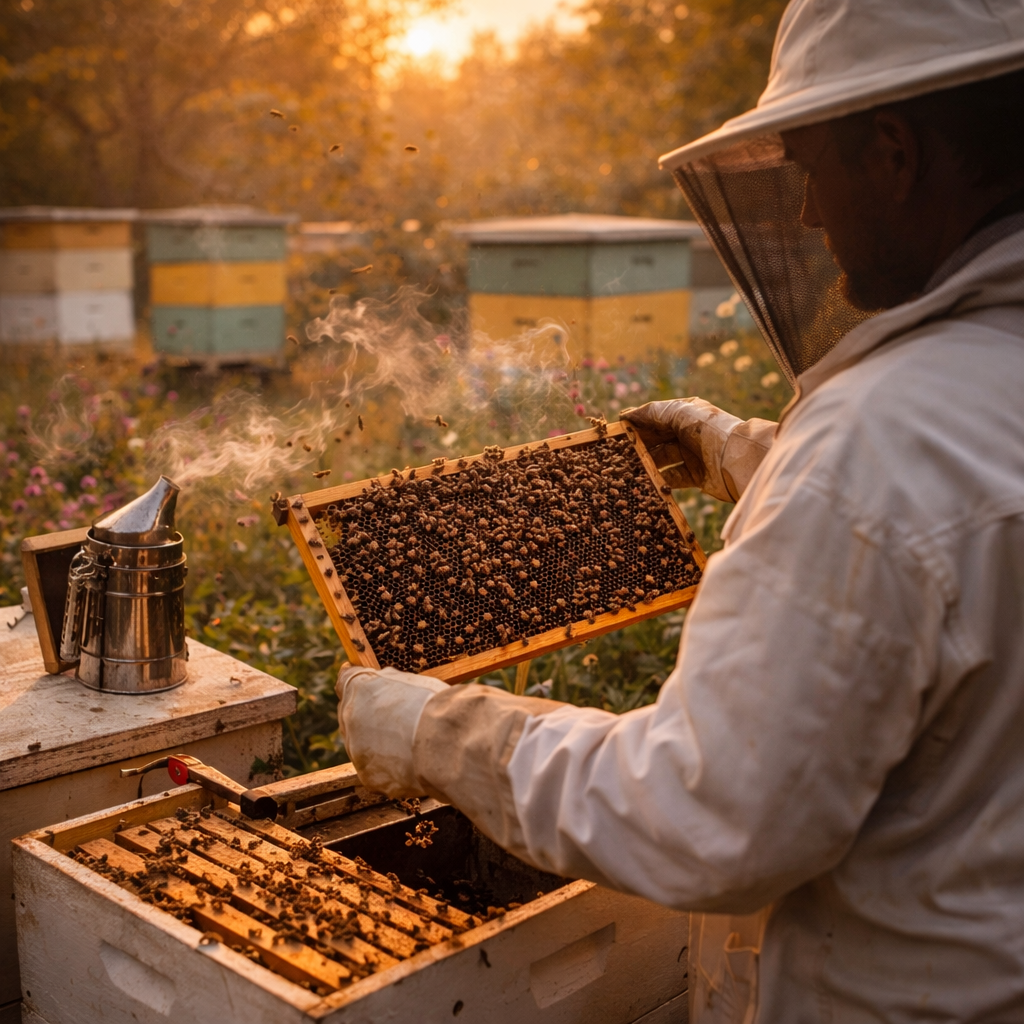
Hives are observed daily through the active seasons. Observation includes flight activity, entrance behavior, foraging patterns, and general colony tone. These external cues guide decisions about when closer attention is needed.
During winter, hives are wrapped and insulated for the season and left largely undisturbed. Observation shifts to external checks only, focused on hive integrity and survival rather than inspection. This seasonal shift reflects the bees' own reduced activity and need for stability.
Maintenance and Intervention
Active-season maintenance occurs approximately weekly, though exact timing varies based on hive activity and needs. Some weeks require closer attention, while others involve minimal disturbance.
Intervention is driven by observation rather than schedule. Supplemental feeding is used only as needed and remains rare. Management choices favor adjustment and restraint over routine interference, allowing colonies to regulate themselves whenever possible.
Harvest and Use
Honey, comb honey, and beeswax are harvested only in strong years and only from colonies that can support removal without compromising stability. Harvest decisions are made at the hive level rather than applied uniformly across the apiary.
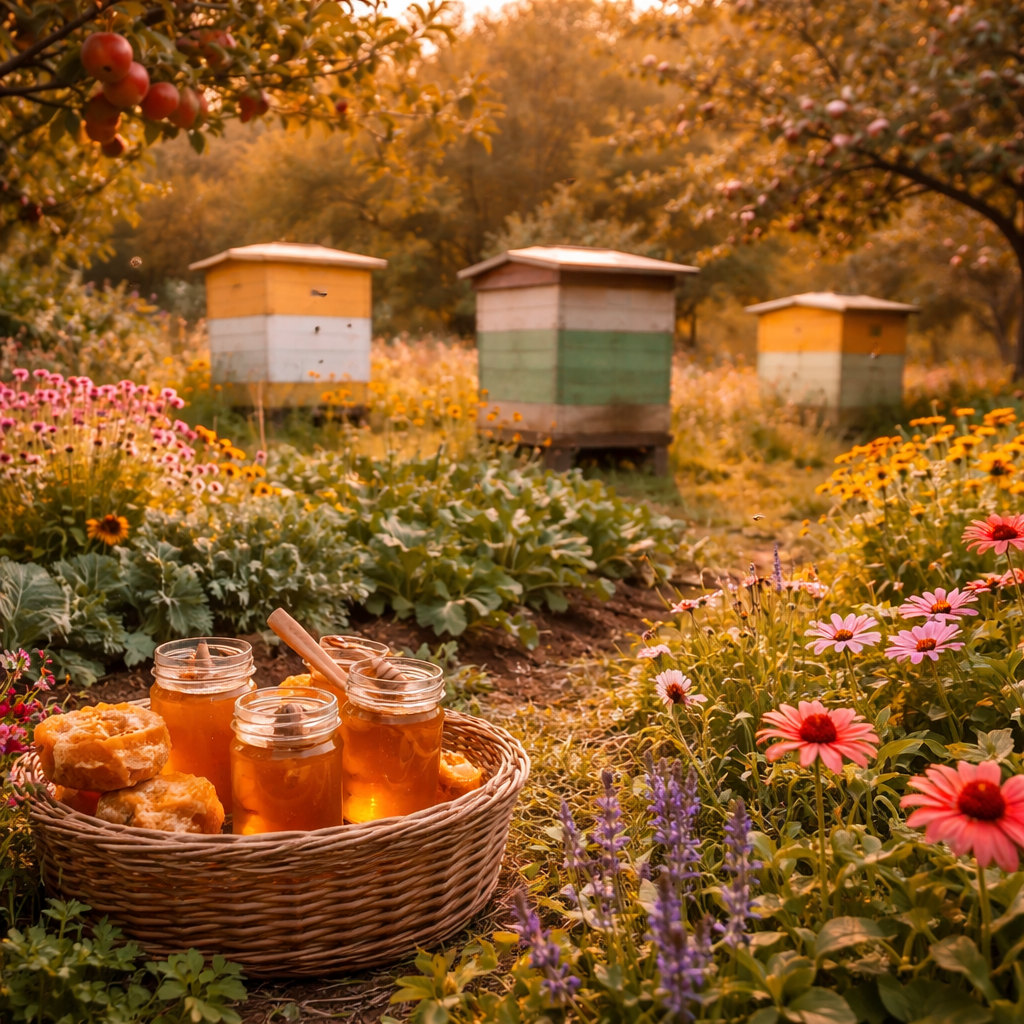
Beeswax is used primarily for candle making, while honey and comb honey are secondary products of a system centered on pollination and colony health. Production is intentionally limited by colony condition and seasonal context.
Integration With Land
Bees play a direct role in supporting the farm's fruit trees, gardens, and forage plantings. Hive placement is chosen to strengthen these systems rather than maximize honey yield alone.
This integration allows pollination services to remain closely tied to land stewardship. The apiary functions as part of the broader landscape rather than as a standalone enterprise.
Daily Routine and Observation
Daily observation remains the foundation of care. Subtle changes in activity, foraging intensity, or behavior often provide the earliest indication of shifting conditions within a hive.
Because colonies communicate health and stress through collective behavior, consistent observation allows small adjustments to be made before larger problems develop. This approach reduces the need for intervention while supporting long-term continuity.
Health Notes and Records
Hive records are maintained in FarmBrite, tracked on a per-hive basis. Records focus on seasonal patterns, colony strength, harvest timing, and notable changes rather than isolated events. Documentation supports long-term understanding of each hive's trajectory over time. Records are used to inform future decisions rather than enforce production benchmarks.
Limits and Scope
Bees are not managed for maximum production. Scale is intentionally limited, and practices reflect the specific land, climate, and constraints of this farm.
This page documents how bees are kept here. It is descriptive rather than instructional and is not intended to serve as a universal model for beekeeping in other settings.