Poultry & Waterfowl Care
Overview
While this site began as a record of our goat care practices, we also maintain similar, species-specific notes for other livestock on the farm. This page documents how we care for poultry & waterfowl in our own setting, using the same observational and descriptive approach.
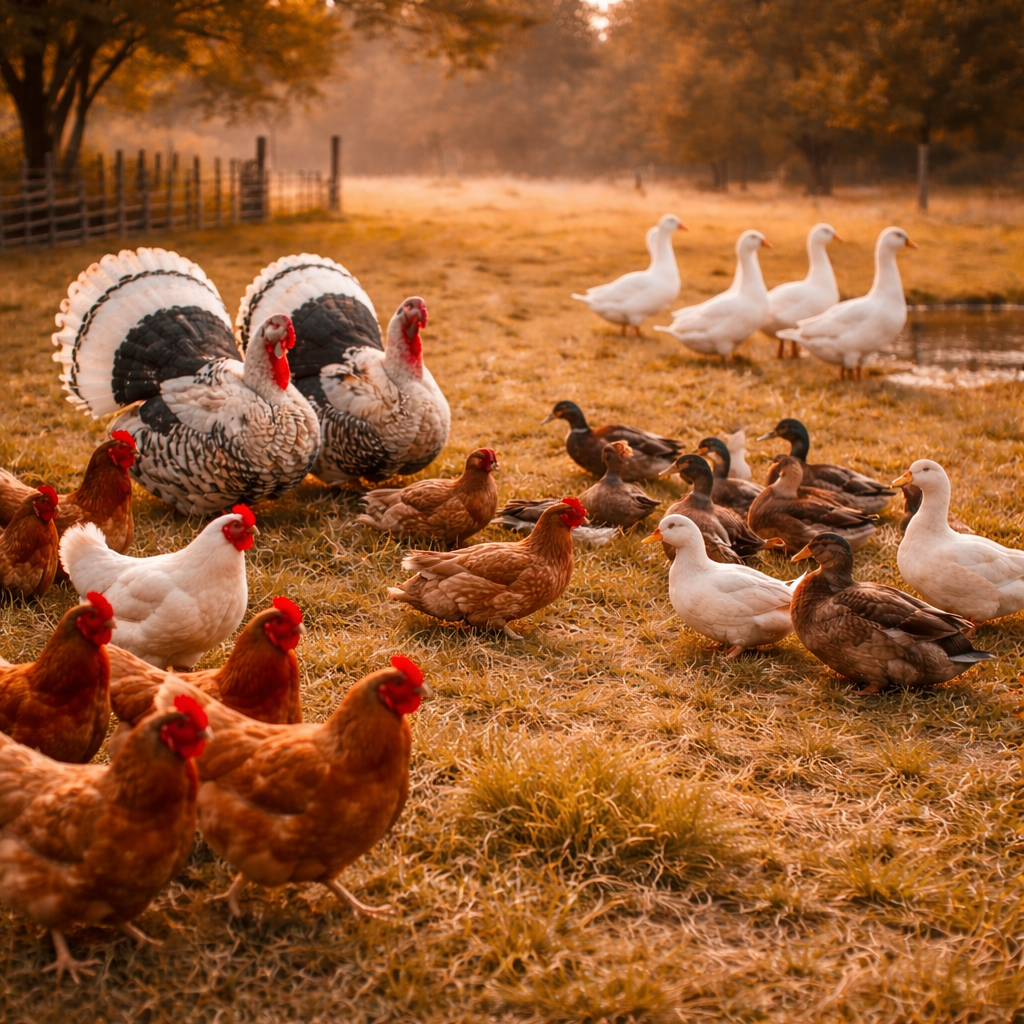
Poultry & waterfowl are kept on our farm as a mixed but intentionally structured system that includes chickens, turkeys, ducks, and geese. Each species is housed and managed according to its own needs rather than being forced into a single, uniform model. The goal is not continuous production, but steadiness over time - healthy birds, manageable routines, and land that remains functional across seasons.
Eggs are used for food and, in some cases, for breeding, depending on species and timing. Decisions are shaped by observation and seasonal rhythm rather than fixed targets. As with other livestock on the farm, poultry and waterfowl care emphasizes continuity, restraint, and adjustment to conditions as they change.
Continuity of Land and Birds
Birds have long been part of the farm's daily life, integrated into household use and broader land patterns rather than isolated as a standalone enterprise. Their role has remained relatively consistent over time, even as specific species and flock sizes have shifted.
Care decisions reflect that continuity. Birds are not pushed to perform uniformly year-round, and periods of higher activity are balanced by quieter seasons. This approach reduces pressure on both animals and land, and it allows routines to remain sustainable rather than reactive.
Flock Structure and Grouping
Poultry & waterfowl are kept in species-appropriate flocks rather than a single mixed group. Chickens, turkeys, ducks, and geese each have different space use, water needs, and movement patterns, and grouping reflects those differences.
Flock structure is adjusted seasonally. Breeding periods, brooding, and winter consolidation all affect how birds are housed and grouped. Where possible, stability is favored. Groups are not reorganized frequently, and changes are made deliberately to minimize disruption.
Chicks, Ducklings, Poults, and Goslings
Early life is supported through a combination of natural brooding and incubation, depending on species and circumstance. Some birds hatch and raise young naturally, while others are incubated and brooded before being transitioned outside.
Young birds are kept in controlled environments during their earliest stages, with attention paid to temperature, footing, and access to feed and water. As they grow, they are introduced gradually to larger spaces and outdoor conditions. Timing is guided by observation rather than fixed schedules.
The focus during early life is viability and steadiness. Numbers are less important than producing birds that transition well into the broader system and remain manageable as they mature.
Feeding Beyond Forage
All birds receive feed appropriate to their species and stage of life. While access to forage and ground activity supplements diets, it does not replace base rations. Feeding routines are kept consistent to reduce stress and competition within flocks.
Adjustments are made seasonally, reflecting changes in weather, growth, and activity level. Rather than frequent fine-tuning, feed decisions tend to be conservative and incremental, prioritizing stability over optimization.
Water Access
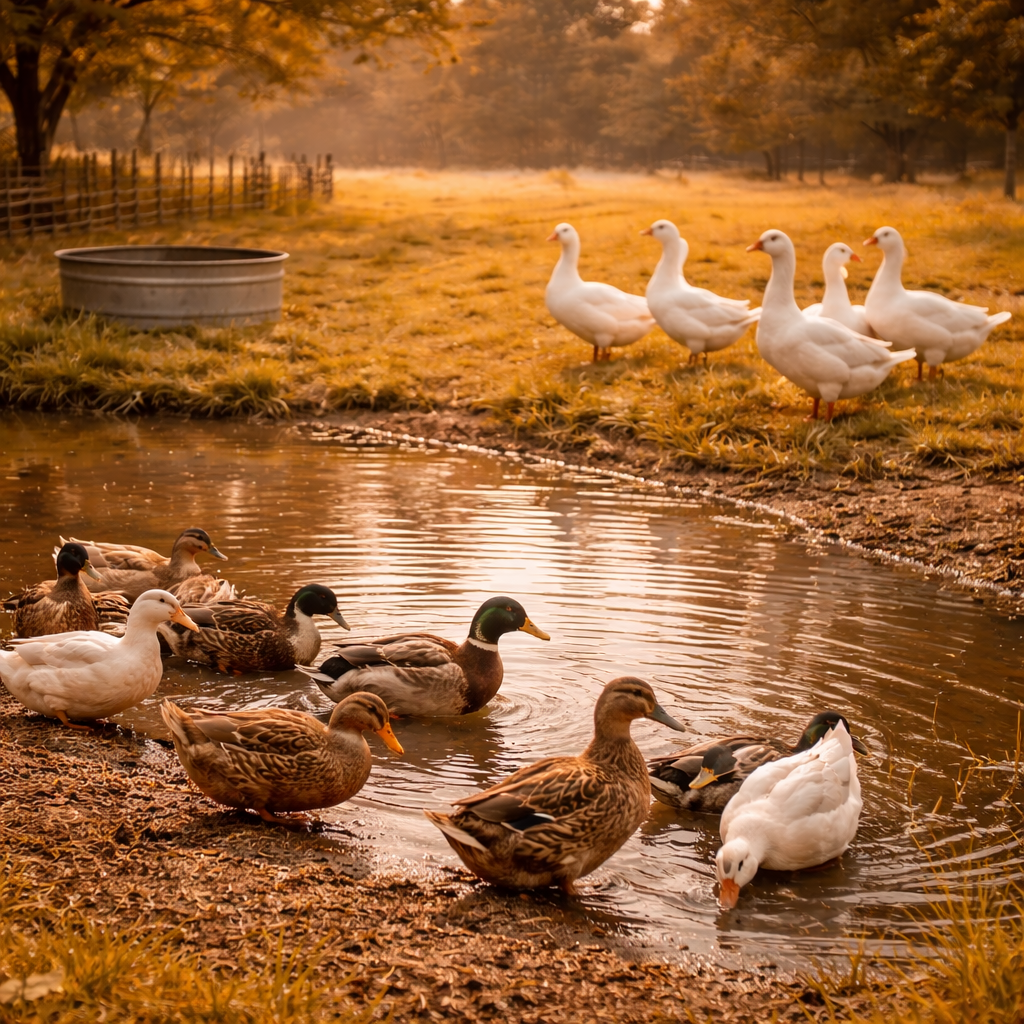
Water access is managed differently across species and ages. Mature ducks and geese have access to a pond, which allows natural behavior without requiring constant handling. Younger waterfowl, including ducklings and goslings - particularly those raised from incubation - are managed with stock tanks or other controlled water sources until they are ready for larger bodies of water.
Water placement is considered alongside ground conditions. Traffic patterns, footing, and cleanup are monitored to avoid creating areas of chronic saturation. Clean water access is treated as part of daily care rather than a static feature.
Shelter, Footing, and Weather Response
Shelter is provided based on species needs rather than a single standardized structure. Birds are given access to dry footing, shade, and protection from wind and precipitation.
Seasonal changes prompt adjustments in layout and access. During winter, birds may be consolidated to simplify care and reduce exposure. In periods of heat or heavy rain, shelter use and movement patterns are observed and accommodated rather than forced.
Daily Routine and Observation
Daily routines are simple and consistent. Feeding, watering, and checks are carried out in a predictable order, allowing changes in behavior or condition to stand out more clearly.
Observation focuses on movement, appetite, feather condition, social interaction, and egg quality. These cues often provide early indication of shifts that need attention. By noticing small changes early, more disruptive interventions are often avoided.
Handling Philosophy
Handling is kept calm and purposeful. Birds are moved, caught, or separated only when necessary, and systems are designed to reduce the need for frequent handling.
Where separation or movement is required, familiarity with routines and spaces helps limit stress. The emphasis remains on designing environments that guide behavior rather than relying on repeated physical intervention.
Health Notes and Records
Bird health and production are tracked using FarmBrite at the species or flock level, rather than as individual animals. Records focus on patterns over time, including breeding seasons, hatch dates, egg production windows, and notable health events.
This approach supports long-term observation and continuity without encouraging constant adjustment. Records are used to understand trends rather than to enforce thresholds.
Movement, Ground Cover, and Land Use
Bird movement is planned to limit pressure on any one area and to allow ground cover to recover. Rotation and location both play a role, with access adjusted based on season, moisture, and species behavior.
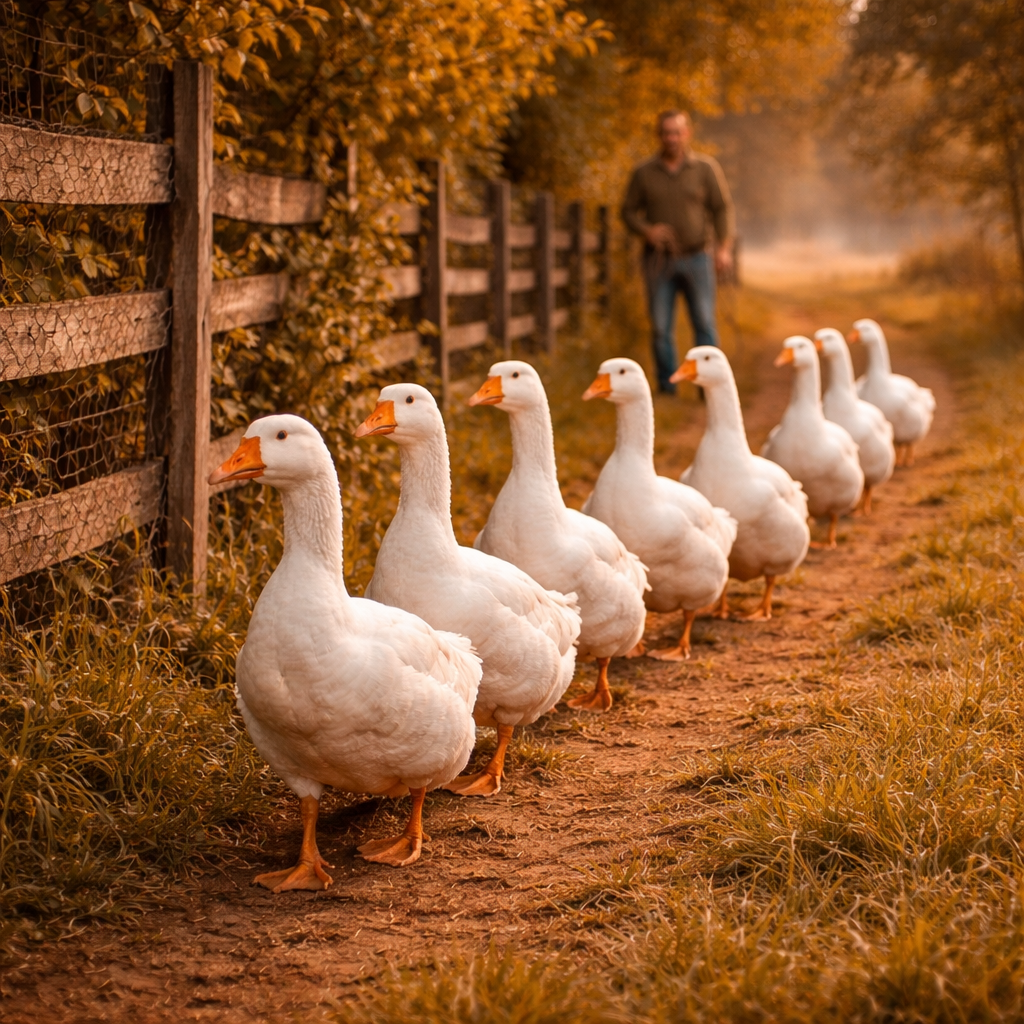
Different birds interact with land in different ways. Chickens scratch, ducks concentrate water, geese graze, and turkeys tend to range more widely. Systems are designed with these differences in mind, so that no single species dominates space or creates ongoing degradation.
Limits and Scope
This page documents how poultry and waterfowl are kept in our own setting. It reflects our land, our scale, and the constraints we work within. It is descriptive rather than instructional, and it is not intended to serve as a universal model.
Practices described here have developed over time in response to observation, adjustment, and recovery. Other settings may require different choices.