Equipment
Overview
Equipment at Grey Barn Farm is best understood as background rather than foreground. Most of what is used in goat care is static, familiar, and largely unchanged from day to day. Tools exist to support routine, observation, and continuity, not to drive outcomes or replace attentiveness.
This page documents the types of equipment present in our setting, how they are situated within daily life, and how their consistent use contributes to predictable routines. It does not describe how to use equipment, recommend specific items, or suggest that the same tools or arrangements are appropriate elsewhere.
Equipment as Environment
From the goats' perspective, equipment is part of the environment. Feeders, fencing, gates, and shelter fixtures are encountered repeatedly, in the same places, and in the same configurations. Over time, these objects fade into the background and become part of what goats expect when moving through space.
This familiarity matters. When equipment remains stable, goats spend less energy assessing novelty and more time engaging in ordinary behavior - feeding, browsing, resting, and moving with the herd. Changes to equipment are therefore made sparingly and introduced deliberately, with attention to how goats respond to the altered environment.
Feeding & Water Equipment
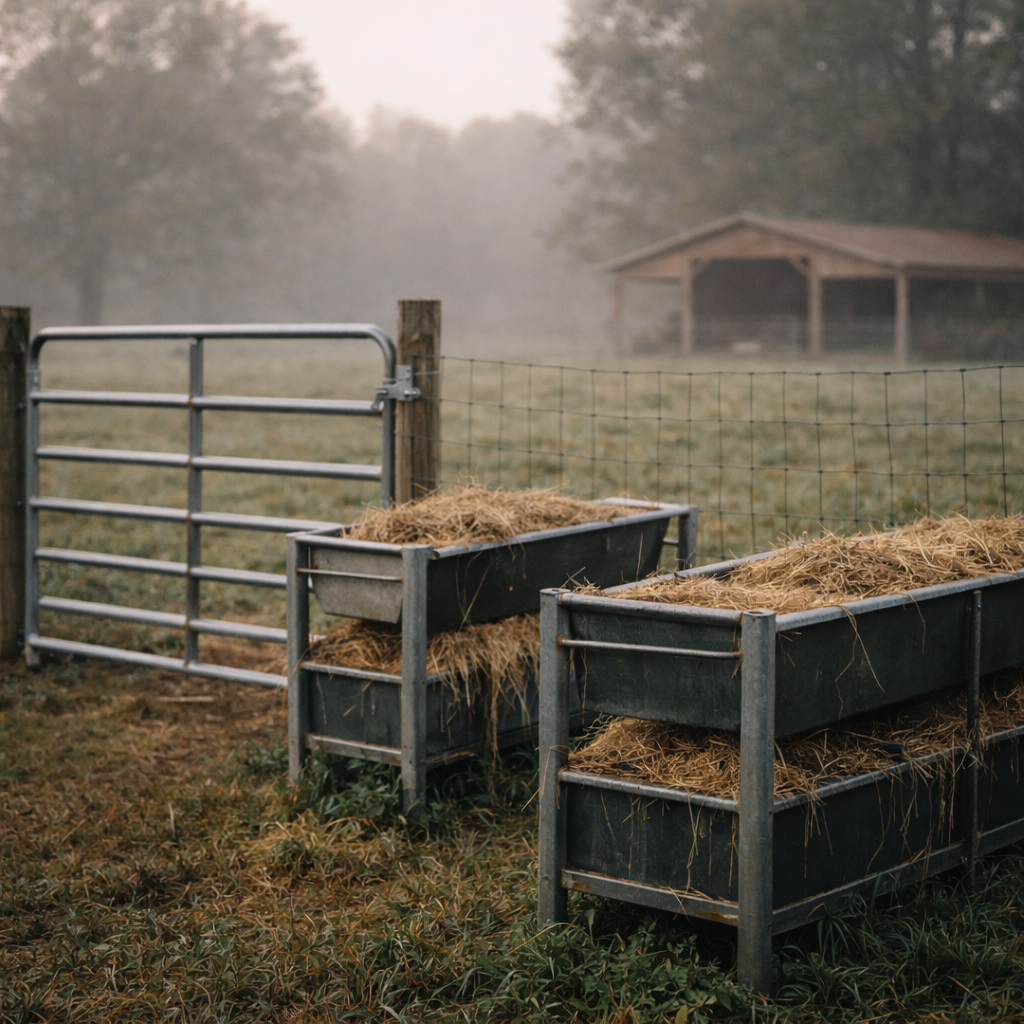
Much of the equipment used daily relates to feeding and water access. These items are positioned to support predictable movement patterns and to reduce unnecessary competition.
Feeders
Each herd has access to multiple:
- Hay feeders
- Pellet feeders
- Loose mineral feeders
- Baking soda feeders
Feeders are checked during routine visits, not only to replenish supplies but also to observe how goats approach and use them.
Water Equipment
Water access is provided primarily outdoors. Depending on pasture, this includes:
- Natural water sources such as creeks
- Water troughs placed in pasture
Water equipment is considered part of feeding infrastructure rather than a separate category, as water intake is closely tied to feed consumption and overall condition.
Fencing, Gates & Boundaries
Fencing and gates are among the most significant pieces of equipment on the farm, though they are often the least noticed once in place.
Permanent Fencing
Pastures are enclosed with:
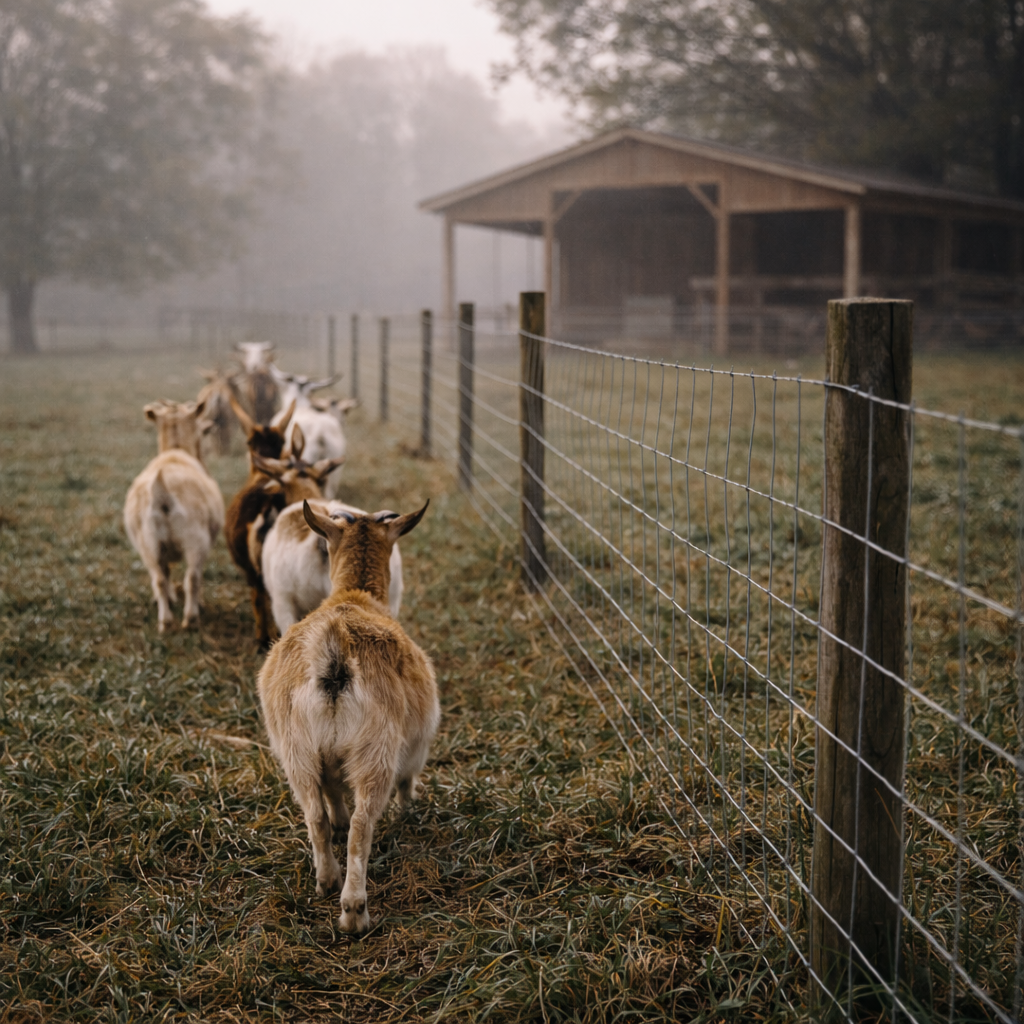
- Six-foot-high goat fencing
- Secondary hot wire lines for additional protection
Gates
Gates function as flow-control points rather than barriers. They guide herd movement during pasture rotations or routine transitions and are kept in the same locations year after year.
Because gates are predictable, goats move through them with minimal hesitation, reducing stress during transitions.
Shelter-Related Equipment
Barns provide shelter from weather and serve as feeding hubs, but they are not used as confinement spaces. Equipment within barns is arranged to support choice rather than control.
Barn Fixtures
Each barn includes:
- Fixed feeding stations
- Covered areas for rest
- Open access points allowing entry and exit
Handling & Movement Tools
Some equipment is used only during handling or movement and is not part of the goats' daily environment. These tools are introduced calmly, used briefly, and returned to storage.
Examples include:
- Buckets used to carry feed or water
- Panels or temporary barriers
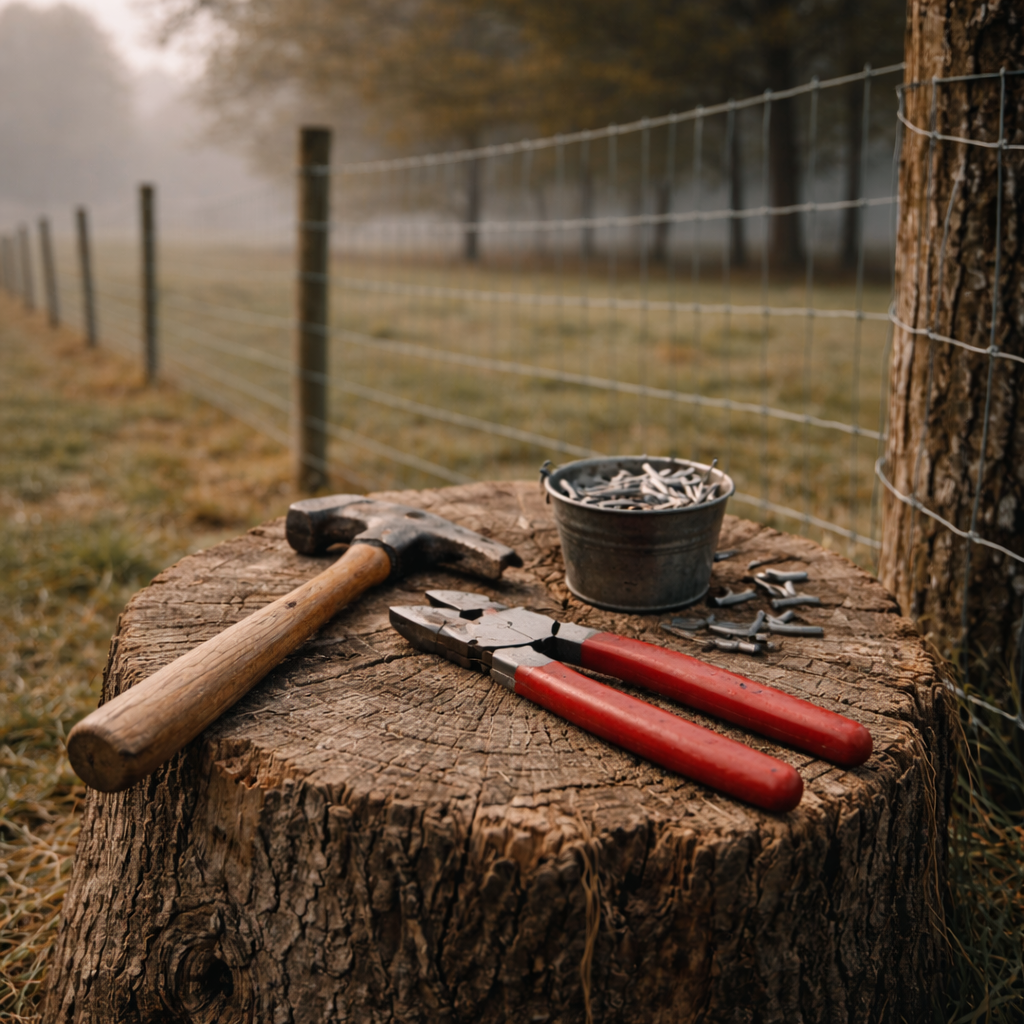
- Hand tools for minor adjustments or repairs
Hoof-Related Equipment
Hoof care is part of long-term maintenance rather than emergency response. Equipment associated with hoof care is kept out of daily circulation and brought out only when needed.
This includes:
- Hoof trimming shears
- Related hand tools used during trimming
Observations made during hoof care are recorded separately as part of individual health notes, rather than embedded in the equipment record itself.
Event-Specific & Temporary Equipment
Some equipment appears only during particular life events or short periods of focused observation. This equipment is not integrated into daily routines and remains stored when not in use.
Birthing Kits
Birthing kits are maintained for use during kidding periods. These kits include supplies intended to support observation and basic care during delivery and the immediate period afterward.
They are assembled in advance and stored out of sight until needed. This approach allows the barn environment to remain unchanged outside of those limited windows.
General Medical Equipment
General medical equipment is kept on hand for situations that require closer assessment or temporary support. This equipment is used sparingly and deliberately and does not form part of daily routines.
Its presence is temporary and purpose-specific, and it is returned to storage once the immediate need has passed.
Identification & Management Tools
Equipment associated with identification and management - such as:
- EID implants
- Tattoo equipment
- Banding tools
Identification equipment supports record continuity rather than daily management and does not alter routine behavior outside of those moments.
Dedicated Equipment by Herd & Space
Equipment is kept specific to each herd and space. Tools used with one group are not rotated through other herds, and items associated with temporary separation or observation areas remain assigned to those spaces.
This approach keeps routines simple and predictable. Goats encounter the same objects, feeders, and tools in the same places over time, which reduces confusion and disruption during routine care.
Maintaining dedicated equipment sets also supports clearer records and observation. When tools remain associated with a single herd or space, it is easier to interpret changes in behavior or condition without introducing unnecessary variables.
This separation is treated as an organizational choice rather than an active intervention - part of how the physical environment remains legible across seasons and management changes.
Equipment & Goat Behavior
Goats are attentive to their surroundings. Even small changes in the physical environment can prompt brief vigilance or investigation.
By keeping equipment stable:
- Familiar objects fade into the background
- Movement patterns remain consistent
- Social interactions proceed without interruption
Redundancy & Calm Continuity
Redundancy in equipment - such as multiple feeders or water access points - reduces competition and minimizes disruption if one item becomes unavailable.
This redundancy is not treated as a contingency plan but as part of ordinary design. When systems have slack built in, daily routines continue smoothly without requiring urgent adjustment.
Maintenance as Ongoing Care
Equipment is inspected and maintained as part of ordinary work rather than as a separate task category. Repairs and adjustments are made incrementally, often before equipment fails outright.
This quiet approach to maintenance supports continuity. Goats experience fewer sudden changes, and the environment remains familiar even as small improvements are made over time.
Records & Equipment
Equipment use is documented indirectly through records rather than tracked as a standalone category. Notes may reference:
- When event-specific tools were used
- Changes in equipment arrangement
- Observations made during handling or care
Limits & Scope
The equipment described here reflects our land, herd structure, climate, and management choices. Different settings may require different tools, arrangements, or levels of infrastructure.
This page documents what exists and how it functions within our system. It does not recommend equipment, describe procedures, or suggest that these choices represent best practices beyond our own setting.