Rabbit Care
Overview
While this site began as a record of our goat care practices, we also maintain similar, species-specific notes for other livestock on the farm. This page documents how we care for rabbits in our own setting, using the same observational and descriptive approach.
Rabbits are kept on our farm as a small, intentional system focused on breeding continuity, steady daily care, and integration with the broader landscape. They are managed at a scale that allows close observation and consistency rather than expansion or output. This page documents how rabbits are kept in our setting, shaped by long-term practice, seasonal conditions, and practical limits.
Rabbits are not raised for meat. Breeding stock and limited placement are the primary focus, with decisions guided by temperament, soundness, and suitability for a restrained system. As with other livestock on the farm, routines emphasize predictability, calm handling, and adjustment over time rather than intervention.
Continuity of Practice
Rabbits have been part of the farm's livestock systems for many years, maintained as a steady presence rather than a growth enterprise. Their role has remained intentionally narrow, allowing care practices to stay consistent and manageable across seasons.
This continuity shapes how decisions are made. Housing, feeding, and breeding are designed to remain sustainable over time rather than optimized for efficiency. By keeping scale limited, the rabbit system remains integrated with daily farm rhythms rather than operating as a separate or intensive unit.
Group Structure and Breeding Control
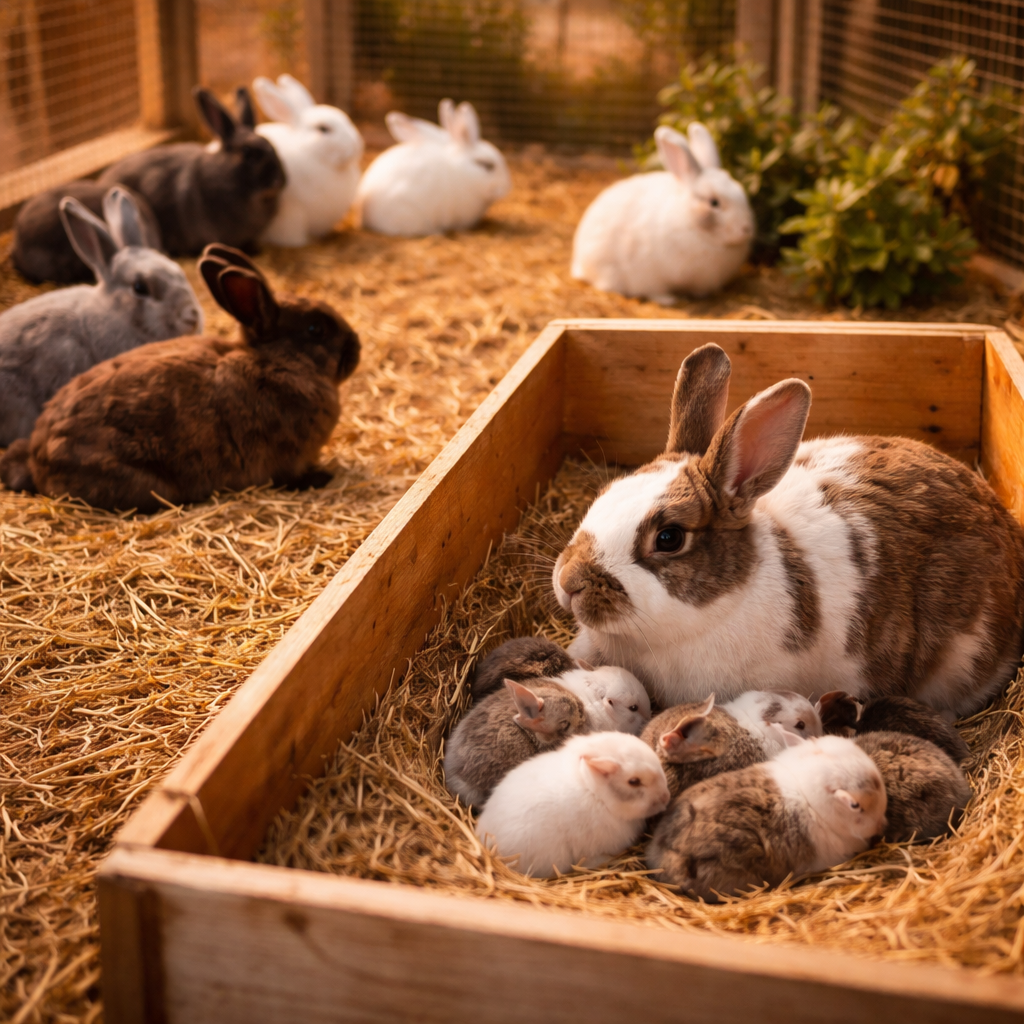
Rabbits are housed in same-sex groups and in doe-with-litter groups, depending on stage and purpose. Bucks and does are separated outside of breeding windows, and grouping is adjusted deliberately rather than frequently.
Breeding is controlled and understated. Pairings are planned with long-term temperament and soundness in mind, and breeding is allowed to occur within clearly defined periods. Group structure prioritizes calm behavior, ease of observation, and predictable routines rather than density or output.
Kits and Early Life
Kits are dam-raised and managed with an observation-first approach. Nesting, nursing, and early development are allowed to proceed without routine intervention, with attention focused on overall condition and behavior.
Transitions are guided by readiness rather than fixed timelines. As kits grow, space and access are adjusted gradually, allowing them to integrate into the broader system without abrupt change. The emphasis during early life is steadiness and viability rather than maximizing numbers.
Housing, Space, and Cleanliness
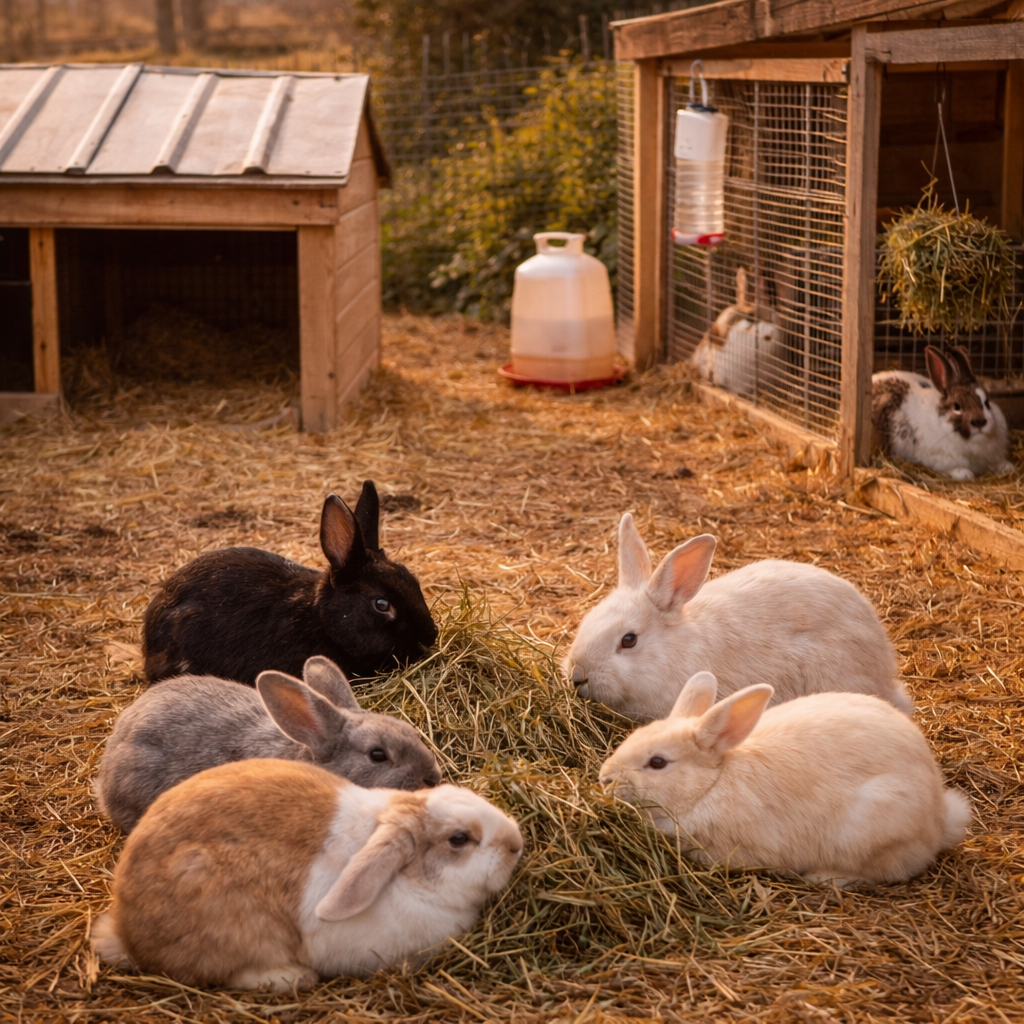
Rabbit housing includes a combination of fixed and moveable structures. This allows protection from weather while also providing flexibility as conditions change. Space is planned to balance airflow, shelter, and ease of daily maintenance.
Cleanliness is part of the daily rhythm rather than an occasional task. Housing is designed to make routine upkeep manageable, supporting animal health without requiring intensive intervention. Seasonal conditions influence how space is used, but overall structure remains stable.
Feeding Beyond Forage
Rabbits have continuous access to hay, which forms the foundation of their diet. Supplemental pellets and greens are provided consistently, with adjustments made conservatively rather than frequently.
Feeding routines are predictable and simple. Free-choice hay is always available, supporting digestion and steady intake. Supplements are used to support condition and breeding demands without introducing unnecessary complexity.
Integration with Land
Rabbit manure is integrated into the farm's fertility cycle. Cleaning routines and placement are planned with land use in mind, allowing nutrients to be returned to soil without creating concentrated pressure in any one area.
This integration supports the broader farm system rather than existing separately from it. The rabbit system is designed to contribute positively to land health while remaining manageable within daily routines.
Daily Routine and Observation
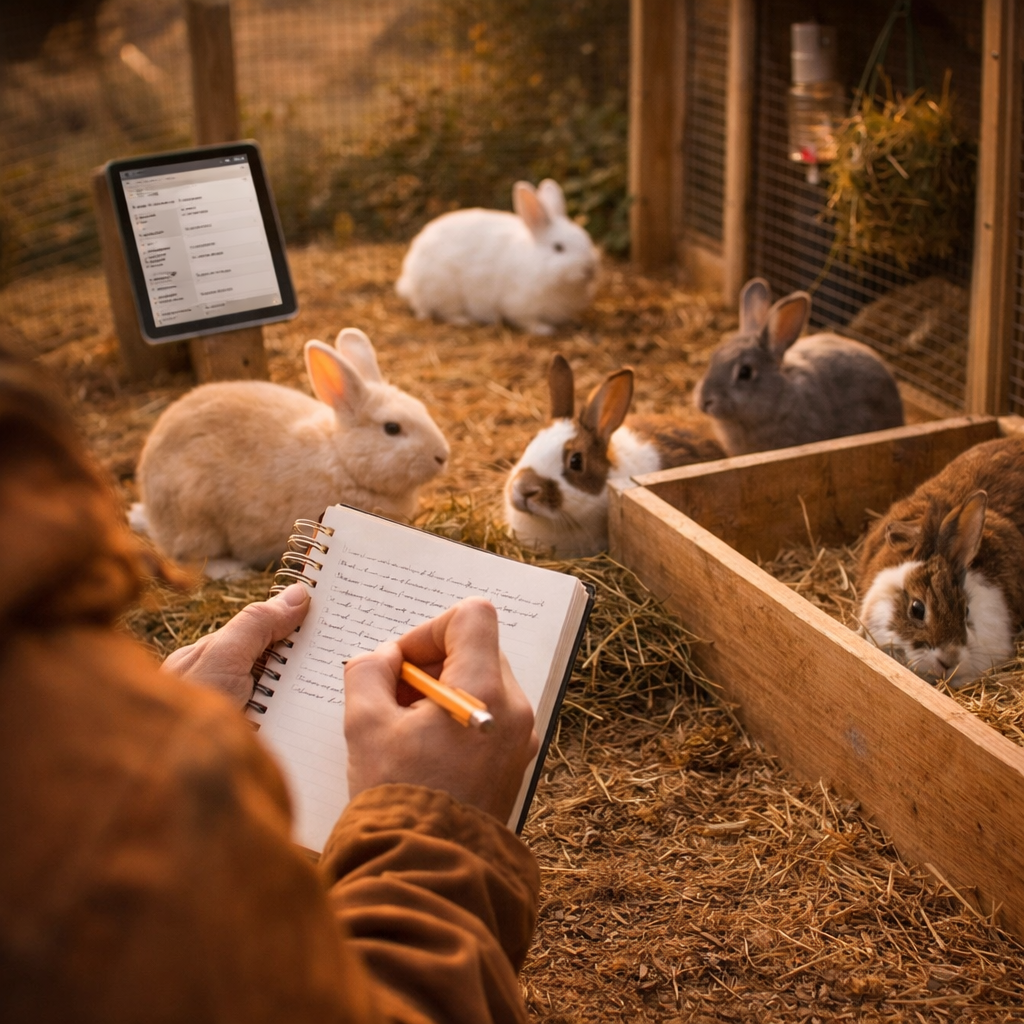
Rabbits are checked at least once daily, with additional attention during cold weather or severe conditions. Daily observation includes appetite, coat and body condition, behavior, and nesting activity where relevant.
Because rabbits often signal changes subtly, consistent observation plays a central role in care. Small shifts are addressed early through environmental or routine adjustments rather than escalation. Predictable daily rhythms help make these changes easier to notice.
Handling Philosophy
Handling is calm, minimal, and purposeful. Rabbits are not handled unnecessarily, and systems are designed to reduce the need for repeated disruption. When handling is required, it is done deliberately and without urgency. Familiar routines and environments help limit stress, supporting both animal well-being and safe daily work.
Health Notes and Records
Health and breeding records are maintained in FarmBrite, tracked at the group and breeding level rather than as isolated events. Records focus on patterns over time, including breeding outcomes, growth, and notable changes in condition.
Documentation supports long-term observation and continuity rather than serving as a trigger for intervention. Records are used to understand trends and inform future decisions within the existing system.
Limits and Scope
Scale is intentionally limited. Rabbits are kept as a supporting system within the farm, not as a growth enterprise. Practices described here reflect this specific setting, including land, climate, and daily constraints.
This page documents what is done here. It is descriptive rather than instructional and is not intended to serve as a universal model.